Color, Trace Learn for Kids: A Practical Early Learning Activity Planner
For parents, educators, and caregivers working with children aged 3–6, finding resources that balance skill development with genuine engagement can be challenging. Color, Trace Learn for Kids positions itself as a versatile activity planner that combines coloring, tracing, shape recognition, and alphabet practice into a single, ready-to-use package. After reviewing its structure and content, this planner offers a straightforward, play-based approach to building foundational early learning skills without overwhelming young learners or the adults guiding them.
What Makes Color, Trace Learn for Kids Worth Considering?
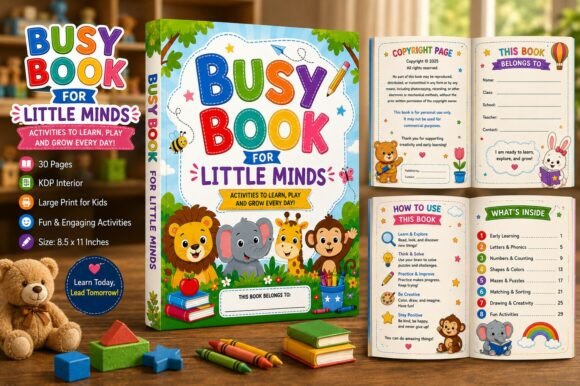
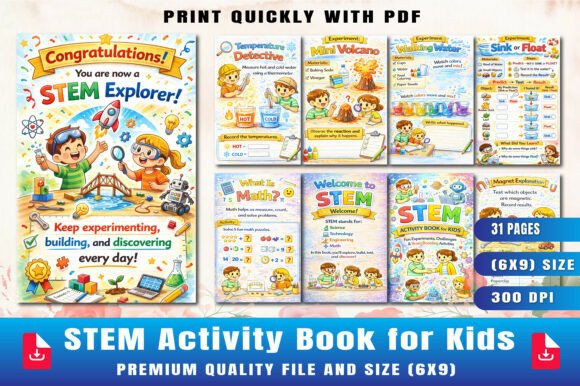
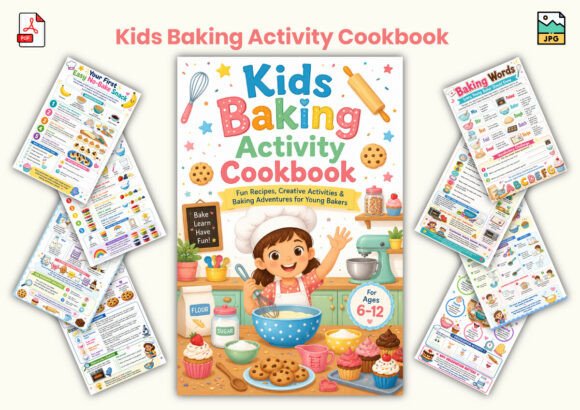
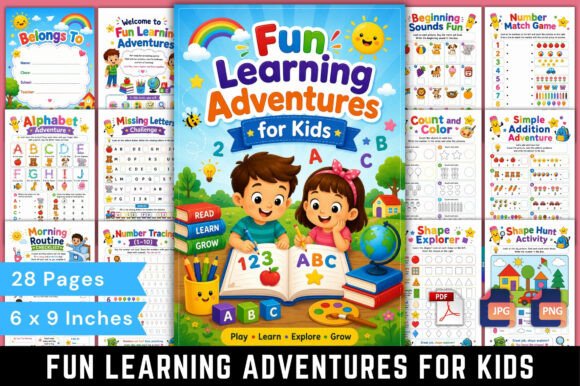
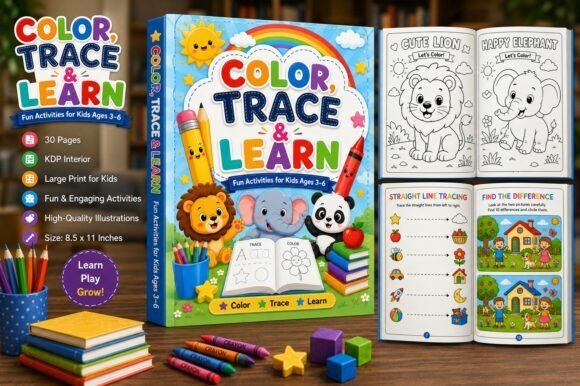
The planner’s core value lies in its integrated design. Rather than treating coloring, tracing, and letter recognition as separate exercises, Color, Trace Learn for Kids weaves them together across 30 different pages. Each page presents a specific activity that encourages a child to color a cute illustration, trace lines or shapes, and practice alphabet letters—all within a single session. This integration is practical because it mimics how young children naturally learn: through varied, short bursts of activity that hold attention and reinforce multiple skills simultaneously.
The emphasis on line tracing practice (straight, curved, and zigzag lines) addresses a critical stage of pre-writing development. Pencil control is often a struggle for preschoolers, and the targeted tracing exercises in this planner provide repetitive, low-pressure opportunities to refine that control. Similarly, shape recognition tracing goes beyond simple identification by requiring children to trace circles, squares, triangles, stars, and other basic forms. This dual action—seeing the shape and manually reproducing its outline—strengthens both visual discrimination and motor planning.
Alphabet practice is limited to uppercase letters A through O, which is a deliberate scope that fits well with introductory learning phases. For many children, mastering the first half of the alphabet before moving on reduces cognitive load and builds confidence. The guided tracing activities for each letter include clear directional cues, helping children form letters correctly from the start.
Quality and Usability of the PDF Files
Color, Trace Learn for Kids is delivered as high-quality, ready-to-upload PDF files in the standard 8.5×11 inch page size. This format is widely compatible with home printers, school copiers, and tablet annotation apps. The files are cleanly organized, with each page dedicated to a single activity type. From a practical standpoint, this eliminates the need to crop, resize, or reformat pages before use—a significant time-saver for busy educators or parents.
The kid-friendly design stands out. Illustrations are cheerful and simple, with bold outlines that make coloring easy for small hands. The layouts are not cluttered; each page provides ample white space, which helps children focus on the task without visual overload. Color palettes are bright but not distracting, and the characters (animals, objects, nature themes) are universally appealing to the target age range.
Consistency and Reliability
Across all 30 pages, the level of difficulty remains appropriate for ages 3–6. The tracing paths start with simpler straight lines early on and gradually introduce curves and zigzags. Shape tracing progresses from circles and squares to stars and other multi‑step forms. The alphabet section maintains the same tracing style throughout, so children can build routine and predictability—important for skill acquisition. Consistency in page layout and instruction style means that once a child understands how to approach one page, they can confidently tackle any page in the planner.
Interactive and Educational Balance
The phrase “educational interactive” is often overused, but in this case, it fits. The planner does not rely on flashy gimmicks or digital extras; instead, it uses physical interaction—coloring, tracing, repeating—to cement learning. For example, a typical page might show a smiling sun, ask the child to color it, then trace a curved line from the sun to a cloud, and finally trace the uppercase letter “S.” This sequence naturally links the visual theme with the abstract symbol, reinforcing letter association in a context that makes sense to a young mind.
Supporting Fine Motor Development and Hand‑Eye Coordination
Fine motor skills are a primary focus of early childhood education, and Color, Trace Learn for Kids addresses them directly. Coloring within defined areas encourages controlled hand movements; tracing lines and shapes requires coordinated eye‑hand action; and letter tracing further refines finger dexterity. In practice, children who use this planner consistently over several weeks often show measurable improvement in pencil grip, line smoothness, and shape reproduction accuracy.
Letter Recognition and Pre‑Reading Skills
The uppercase alphabet tracing from A to O, while limited, is well‑executed. Each letter appears with a starting dot and directional arrows, guiding the child’s pencil along the correct stroke order. This structure helps prevent common reversal errors and builds muscle memory. Because the activities are designed to be repeated, children get multiple exposures to each letter across different thematic contexts, which supports long‑term retention. For educators, this planner serves as a useful supplement to phonics programs or letter‑of‑the‑week curricula.
Play‑Based Learning and Confidence Building
One of the planner’s quiet strengths is its ability to build confidence through small, achievable tasks. A child who successfully traces a zigzag line or colors a turtle feels a genuine sense of accomplishment. That positive reinforcement encourages them to attempt the next, slightly harder task. The variety within each page prevents boredom—unlike some workbooks that drill the same skill for pages on end. From a teacher’s perspective, this engagement reduces off‑task behavior and makes transitions between activities smoother.
Possible Limitations to Consider
While Color, Trace Learn for Kids is well‑suited for its intended age group, it is not a complete preschool curriculum. The alphabet coverage stops at O, so children ready to practice letters P through Z will need supplementary materials. Additionally, the planner focuses solely on uppercase letters; lowercase letter practice is not included. Educators working with kindergarten readiness standards may want to pair it with a lowercase tracing resource.
Another consideration is that the planner is print‑based. If you prefer fully digital or app‑based learning, this may require more preparation time. However, for those who value screen‑free, hands‑on activities, the PDF format is an advantage. The pages can be laminated or placed in sheet protectors for reuse with dry‑erase markers, extending their lifespan significantly.
Parents and Caregivers at Home
For families looking for structured yet playful learning activities, this planner is a convenient resource. It requires no lesson planning—simply print a page and guide your child through the activity. The variety keeps children engaged during quiet time or travel, and the simple instructions make it easy for older siblings or babysitters to facilitate. Parents of 3‑ and 4‑year‑olds will find it particularly useful for building school‑readiness skills before kindergarten.
Preschool and Daycare Teachers
In a classroom setting, Color, Trace Learn for Kids works well as a morning warm‑up, a center activity, or a take‑home practice sheet. The 30‑page count provides enough material for several weeks of daily activities. Teachers can align pages with weekly themes (e.g., farm animals, weather, shapes) thanks to the variety of illustrations. Because each page is self‑contained, it also serves as a simple assessment tool for fine motor progress.
Homeschooling and Supplemental Education
Homeschooling families, especially those following a relaxed or play‑based philosophy, will appreciate the planner’s alignment with early learning milestones. It can be integrated into a morning basket routine or used as an independent activity while the parent works with another child. The trace‑and‑color format encourages focus and task completion, skills that transfer well to more structured academics later.
Occupational Therapists and Special Education Practitioners
Though not designed specifically for therapy, the planner’s clear, repetitive tracing exercises make it a useful tool for occupational therapy sessions targeting fine motor control, hand strength, or visual‑motor integration. The non‑distracting layouts and consistent skill progression allow therapists to isolate specific challenges and track improvement over time.
Practical Recommendations for Use
To get the most from Color, Trace Learn for Kids, consider the following approaches:
- Print on quality paper – heavier cardstock or bright white paper improves the coloring experience and durability.
- Use a pencil grip aid – for children still developing their tripod grasp, pair the tracing activities with a handwriting grip to reinforce proper positioning.
- Incorporate verbal cues – while tracing, say the shape name or letter sound aloud to strengthen auditory‑visual connections.
- Repeat pages after a break – revisiting a page a week later can show dramatic improvement and boost the child’s sense of progress.
- Combine with physical manipulatives – after tracing a circle, have the child find round objects around the house; after tracing a square, build one with craft sticks. This bridges the abstract activity to real‑world understanding.
Is Color, Trace Learn for Kids Right for Your Needs?
If your goal is a simple, effective, and engaging resource that builds fine motor control, shape and letter recognition, and creative confidence in children aged 3–6, this planner delivers on its promises. It is not a comprehensive early learning system, but it fills a specific niche: structured, print‑based, play‑focused practice that respects a child’s attention span and developmental stage. For educators, parents, and therapists seeking a no‑fuss supplement to existing curricula, the 30‑page format offers immediate, practical value. The balance of coloring, tracing, shapes, and alphabet work in one package makes it a sensible addition to any early learning toolkit.