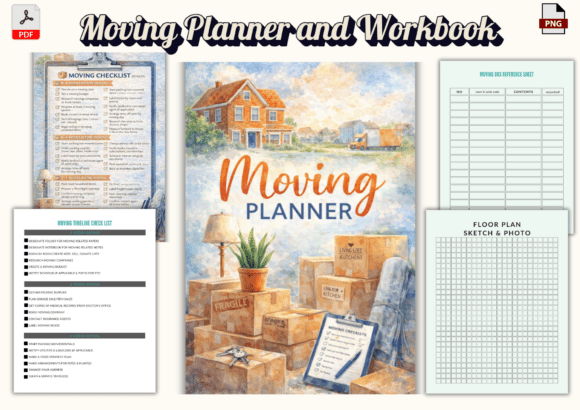
Moving Planner Workbook: A Practical Tool for Organized Relocation
Moving homes is often cited as one of life’s most stressful events. The process involves countless tasks: sorting belongings, arranging utilities, coordinating movers, updating addresses, and managing timelines. Without a structured approach, it is easy to feel overwhelmed or miss critical steps. The Moving Planner Workbook presents itself as a comprehensive organizational tool designed to address this chaos. This article examines what this workbook offers, who may benefit from it, where it excels, and where alternatives might be more suitable.
Understanding the Moving Planner Workbook
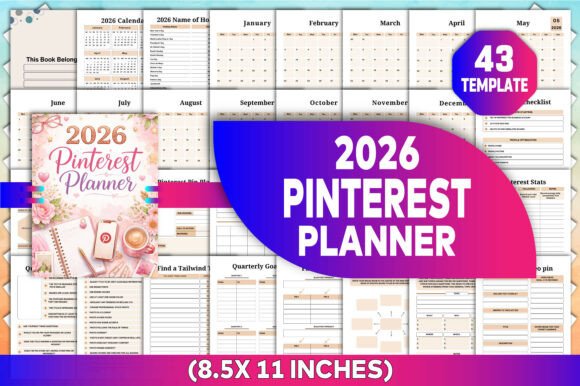
The Moving Planner Workbook is a digital download (PDF and PNG formats) intended to serve as a central hub for all moving-related tasks. It spans 43 pages at 8.5 x 11 inches and includes a range of sections: a detailed moving checklist, room-by-room packing planners, a utilities and services tracker, a moving timeline with action steps, notes and resources pages, and new home planning sections. The workbook is designed to be printed or used digitally, with a high-resolution, no-bleed layout that makes it straightforward to fill in by hand or on a device.
At its core, this workbook aims to replace scattered sticky notes, mental reminders, and multiple spreadsheets with one cohesive document. By walking users through each phase of moving—from early planning through packing, moving day, and settling in—it attempts to reduce the cognitive load and anxiety associated with relocation.
Who Might Find This Workbook Valuable
Anyone facing a move could potentially benefit from a structured planner, but certain groups may find the Moving Planner Workbook particularly aligned with their needs.
First-time movers often lack experience with the sequence of tasks required for a successful relocation. A guided planner that outlines steps in a logical order can prevent common oversights, such as forgetting to transfer utilities or failing to notify important contacts. The workbook’s checklist and timeline provide a clear roadmap that reduces guesswork.
Families and busy parents managing multiple schedules and responsibilities may appreciate having all moving information in one place. The room-by-room packing planners allow for delegation and tracking across household members, while the notes pages offer space for school records, pet arrangements, or special instructions.
Renters and homeowners alike can use the workbook, though renters may particularly value the utilities tracker and new home planning sections for lease-end obligations and move-in inspections. The workbook does not discriminate by property type, making it flexible for various living situations.
People moving long-distance face additional complexity: coordinating travel, managing timelines across time zones, and handling logistics from afar. The structured timeline and resource pages can help keep such moves on track, though the workbook does not include specialized sections for interstate or international regulations.
Key Features and Practical Benefits
The Moving Planner Workbook offers several features that contribute to its usefulness:
- Comprehensive checklist: A broad overview of tasks from start to finish, reducing the chance of missing important steps.
- Room-by-room packing planners: Allows users to inventory items room by room, making unpacking more systematic. This can shorten the time spent searching for necessities in a new home.
- Utilities and services tracker: A dedicated space to record contact information, account numbers, and transfer dates for electricity, water, internet, and other services. This can simplify the transition and prevent service gaps.
- Timeline with action steps: Breaks the move into phases (e.g., eight weeks out, four weeks out, one week out, moving day) with suggested actions. This helps users pace themselves and avoid last-minute rushes.
- New home planning sections: Areas for sketching room layouts, noting measurements, and planning furniture placement. This can reduce decision fatigue on moving day.
- Digital and printable formats: The PNG and PDF options give users flexibility. Those who prefer handwriting can print pages; digital users can fill in fields using annotation tools.
A primary benefit is the reduction of mental clutter. When all tasks, deadlines, and details are documented in one workbook, the brain is freed from constant reminders. This can lower stress and help movers feel more in control.
Considerations and Limitations
While the workbook provides a structured framework, it is not without tradeoffs. Understanding these can help potential users decide whether it aligns with their moving style.
Scope and depth: The workbook covers a broad range of moving tasks but does not go into deep detail on specialized topics. For example, it does not offer guidance on downsizing strategies, estate sales, or moving with fragile heirlooms. Users with highly specific needs (e.g., moving a home business, relocating a large family with unique schedules) may require additional resources.
Digital-only delivery: The product is a digital download. This means users must print it themselves or use a device to annotate it. Those who prefer a bound physical book may need to print and bind it, which adds time and cost. Conversely, digital users can easily duplicate pages or share them with family members.
One-size-fits-most approach: The workbook is designed for a typical residential move. It may not account for every nuance, such as moves involving multiple properties, temporary housing, or corporate relocation packages. Users should expect to adapt the workbook to their specific circumstances.
No digital interactivity: Unlike some digital planners that offer clickable navigation, automatic date calculations, or integration with calendar apps, this workbook is essentially a printable PDF. For users who prioritize digital automation, a more tech-forward solution might be preferable.
Learning curve: While the layout is straightforward, some users may find 43 pages daunting. It helps to view it as a reference tool rather than a daily journal. Not every section needs to be used; cherry-picking relevant pages is perfectly valid.
When the Workbook Is a Strong Fit
The Moving Planner Workbook is a strong choice in several common scenarios:
- You are moving for the first time and want a clear, step-by-step guide that prevents you from forgetting essentials.
- You prefer analog organization or enjoy the tactile experience of writing lists and checking boxes. If digital tools feel impersonal or distracting, a printed workbook can be grounding.
- You have a moderate-sized household (e.g., a family of four) with standard moving needs. The room-by-room planners and timeline scales well for typical homes.
- You want to involve multiple family members in the process. You can photocopy the packing planners and assign each person their own section, fostering collaboration.
- You are on a budget and want an affordable organizational tool. The digital download is generally priced lower than full moving software or a professional organizer’s consultation.
When Alternatives May Be Worth Considering
No tool works for everyone. There are situations where alternative approaches might serve you better:
- You prefer a fully digital, app-based system with reminders, collaboration features, and cloud sync. Apps like Trello, Todoist, or specialized moving apps (e.g., Moving Connect) offer interactive checklists that can be shared with family and updated in real time.
- You are moving a very large household or business inventory that requires detailed inventory management, barcode scanning, or professional logistics. A spreadsheet or dedicated inventory software may offer more granular tracking.
- You have a very small move (e.g., a studio apartment or one suitcase) and need only a simple list. The full workbook may feel overly detailed, and a single-page checklist could suffice.
- You are managing a move with tight deadlines or complex logistics, such as a corporate relocation with multiple staging points. In such cases, a professional moving coordinator or specialized software may be a better investment.
- You want guided help beyond planning, such as tips for downsizing, donating, or selling items. The workbook does not include decision matrices or emotional support resources for letting go of belongings.
Making an Informed Decision
When evaluating whether the Moving Planner Workbook meets your needs, consider the following decision framework:
- Assess your moving complexity. Are you moving a standard household with straightforward logistics? The workbook likely covers your needs. If your move involves unique factors (e.g., international, military, corporate), supplement it with specialized resources.
- Consider your organizational style. Do you thrive with printed lists and physical planners? The workbook’s format is ideal. If you prefer apps and notifications, a digital tool may be more effective.
- Evaluate your timeline. Do you have enough lead time to work through a 43-page planner? If you are moving in a week, a condensed checklist might be more practical. However, you can still use the workbook selectively for room-by-room packing.
- Think about collaboration. Does your household need shared access? The workbook can be printed and distributed, but real-time digital syncing is not possible. If your partner prefers digital lists, consider combining the workbook with a shared app.
- Weigh cost versus value. The workbook is typically low-cost compared to the stress it may prevent. If it saves you one late fee, one forgotten utility registration, or one hour of unpacking confusion, it may pay for itself.
Ultimately, the Moving Planner Workbook is a practical, well-organized tool that addresses the core challenge of moving: keeping track of many interdependent tasks. It does not promise to eliminate stress entirely, but it provides a structure that can make the process more manageable. By understanding its strengths and limitations, you can decide whether it aligns with your move’s scale, your personal habits, and your desire for order during a transitional time.