1000 High-Converting Design Prompts: When Design Meets Performance
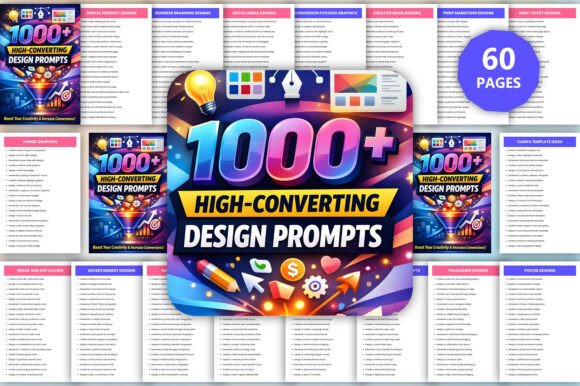
There is a quiet tension that runs through almost every creative project. You want something that looks beautiful. You also need it to work. A gorgeous ad that no one clicks. A stunning landing page that gets ignored. A beautifully branded post that generates zero engagement. That gap between aesthetics and results is where so many designers, marketers, and entrepreneurs get stuck. 1000 High-Converting Design Prompts is a digital PDF built specifically to bridge that gap. It is not a design theory book. It is a collection of ready-to-use, conversion-focused prompts designed to help you generate visuals that actually drive action.
Why Conversion-Focused Design Matters More Than Ever
Every visual you produce is competing for attention. On social media, users scroll past hundreds of posts per minute. On a landing page, visitors decide within seconds whether to stay or leave. In eCommerce, a product image can be the difference between a sale and an abandoned cart. Design that looks good but fails to communicate value, urgency, or trust is simply decoration. 1000 High-Converting Design Prompts approaches design from the opposite direction. It starts with the outcome and works backward to the visual. What do you want someone to feel? What do you want them to do? Then it gives you the language and structure to create a design that delivers that result.
Social Media Growth Without the Guesswork
Running a social media account for a brand or client means constantly needing fresh content that stops the scroll. You need Instagram carousels that teach something valuable, reel covers that promise entertainment, and Facebook ads that look native to the platform. 1000 High-Converting Design Prompts includes prompts for all of these. Instead of staring at a blank canvas wondering what to create, you have a prompt like "Design a testimonial carousel that highlights three customer results with social proof icons" or "Create a countdown story template that builds urgency for an upcoming launch." These are not vague ideas. They are specific, actionable prompts that translate directly into design briefs.
A social media manager handling multiple accounts can use these prompts to batch-create content in half the time. A freelancer pitching to a new client can pull from the collection to show exactly what kind of visuals they can produce. The prompts remove the friction of deciding what to design next.
Business Branding That Communicates Premium Value
Branding is about perception. A luxury logo, a cohesive brand board, a well-designed brochure, or a polished pitch deck all signal credibility. But not everyone has years of brand strategy experience. 1000 High-Converting Design Prompts offers prompts for creating brand identity assets that feel intentional and premium. Things like "Design a brand guidelines page that shows logo usage, color palette, typography, and tone of voice in a clean layout" or "Create a business card design that uses negative space to convey sophistication."
For a startup founder designing their own brand, these prompts act like a creative director in your pocket. For an agency owner, they speed up client deliverables. You do not have to reinvent the wheel every time. You adapt the prompt to the brand and move forward.
Sales Funnels and Landing Pages That Convert
This is where the conversion focus of the book really stands out. A landing page is not a portfolio piece. It is a sales tool. Every element needs a purpose. 1000 High-Converting Design Prompts includes prompts for hero sections that immediately communicate value, CTA banners that feel impossible to ignore, pricing tables that reduce comparison anxiety, and trust badges that build credibility. A prompt like "Design a pricing section with three tiers where the middle option is visually highlighted as the most popular" is not just about layout. It is about psychology.
Marketers running lead generation campaigns can use these prompts to A/B test different visual approaches. UX designers working on SaaS products can pull prompts to design onboarding flows that reduce drop-off. The prompts are structured so that you can adapt them to different industries without losing the conversion logic.
eCommerce and Product Listings That Sell
Product photography and listing images are often the deciding factor in an online purchase. 1000 High-Converting Design Prompts covers product mockups, comparison graphics, bundle visuals, Amazon listing images, Shopify banners, and sales badge designs. Consider a prompt like "Create a comparison graphic that shows a before and after using your product with a clear winner highlight" or "Design a bundle offer visual that shows the individual items and the total savings compared to buying separately."
An eCommerce store owner can use these to improve conversion rates without hiring a designer. A print-on-demand seller can generate mockups that feel professional and trustworthy. The prompts take the guesswork out of what to show and how to show it.
Print-on-Demand and Merch That Actually Sells
The print-on-demand market is crowded. Standing out requires designs that resonate with a specific niche. 1000 High-Converting Design Prompts includes prompts for T-shirt typography, hoodie designs, mugs, wall art, stickers, niche quotes, and seasonal merch concepts. A prompt like "Design a typography T-shirt for coffee lovers that uses a bold serif font and a warm color palette" or "Create a motivational wall art piece that works well in a home office aesthetic."
For a POD seller, these prompts remove the creative block of coming up with new ideas every week. You can work through categories and generate a consistent stream of products that feel cohesive. The prompts also help you target specific audiences instead of designing for everyone.
Website UI and Mobile App Layouts
User interface design is about clarity and flow. 1000 High-Converting Design Prompts covers homepage layouts, SaaS dashboards, mobile app screens, onboarding flows, and dark mode variations. A prompt like "Design a SaaS dashboard homepage that shows key metrics at a glance with a clean card layout" or "Create a mobile app onboarding flow that takes the user through three screens with simple illustrations and a progress indicator."
UI designers working on tight deadlines can use these to prototype faster. Product managers can use them to communicate visual direction to developers. The prompts are specific enough to be useful but flexible enough to adapt to different brands and products.
Who Benefits From This Collection
Freelance designers can use the prompts to expand their service offerings. Instead of only offering logo design, they can pitch complete brand identity packages, social media templates, and landing page designs. The prompts give them a clear direction to follow.
Marketing teams can use them to maintain consistent conversion-focused design across campaigns. Instead of each designer interpreting a brief differently, the prompts create a shared language for what needs to be created.
Entrepreneurs and founders who are not designers can use the prompts to brief freelancers or generate initial concepts themselves. It saves time and money.
Agency owners can use the collection as a training resource for junior designers or as a way to standardize deliverables across multiple clients.
Practical Considerations Before Using It
This collection is a prompt library, not a design tool. You still need access to design software like Canva, Figma, Adobe Suite, or an AI image generator to turn the prompts into actual visuals. The value is in the clarity and specificity of the prompts, not in pre-made templates. If you are looking for ready-to-use designs, this is not that. If you want a system for generating conversion-focused designs quickly, it will serve you well.
The prompts are text-based. You read them, interpret them, and create. Some users may want more visual examples alongside the prompts. That said, the prompts are detailed enough that you can visualize the outcome without a reference image.
Another consideration is relevance across industries. While the prompts cover a wide range of use cases, some are more suited to direct-to-consumer brands or digital products. If your work is primarily B2B or highly technical, you may need to adapt certain prompts to fit that context. The logic of conversion-focused design still applies, but the tone and style may shift.
Strengths That Make It Stand Out
The biggest strength is how it shifts your thinking from "what looks good" to "what works." Each prompt is built around an objective. You are not just designing a hero section. You are designing a hero section that communicates value in under three seconds. You are not just creating a social media graphic. You are creating one that drives clicks.
Another strength is variety. With 1000 prompts, you are unlikely to run out of ideas quickly. You can work through categories based on your current project or use the prompts as a creative warm-up. The structure also makes it easy to find what you need. Social media prompts are grouped together. Funnel prompts are grouped together. You can jump to the section that matches your immediate need.
The prompt language is practical, not poetic. There is no fluff. Each prompt tells you what to design, what elements to include, and what the goal is. That directness makes it easy to use even when you are tired or stuck.
How Different Users Work With It Differently
A designer working with a fitness brand might pull prompts for Instagram reel covers, testimonial posts, and pricing tables. They adapt the tone to be energetic and motivational. A designer working with a luxury skincare brand pulls prompts for logo design, packaging mockups, and brand boards. They adapt the tone to be minimal and refined. The same prompt library serves both because the conversion principles are universal, but the execution is flexible.
A solo entrepreneur creating their own Shopify store might use the eCommerce and POD sections heavily. They work through the prompts systematically to create all their product images, listing graphics, and sales banners. A marketing manager preparing for a product launch might focus on the funnel and landing page sections to design the entire customer journey from ad to checkout.
The prompts also work well for brainstorming sessions. A team can pick a few prompts, discuss how they apply to their brand, and then split up the execution. It turns design planning from a vague conversation into a clear action list.
Final Thoughts on Integration
1000 High-Converting Design Prompts fits best into a workflow where you already have a process but want to speed it up or improve the outcomes. It is not a replacement for understanding your audience or knowing basic design principles. It is a tool that makes applying those principles faster and more consistent. When you combine it with a good design tool and a clear brand strategy, it becomes a reliable resource for producing visuals that do not just look good but actually perform.