Busy Book for Little Minds: A Practical Activity Planner for Early Learning at Home
When you are looking for ways to support your preschooler's development, the range of options can feel overwhelming. Between digital apps, educational toys, printable worksheets, and structured workbooks, it is not always clear what will genuinely hold a young child's attention while building the skills they need. Busy Book for Little Minds positions itself as a play-based activity planner that combines tracing, matching, puzzles, and creative exercises into a single resource. But how does it compare with other approaches, and what should you consider before choosing it for your child?
This article walks through what this activity book offers, how it stacks up against similar resources, and where it fits best in your child's learning journey.
What Busy Book for Little Minds Offers
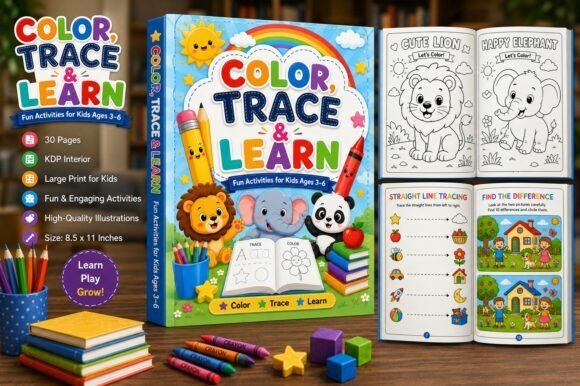
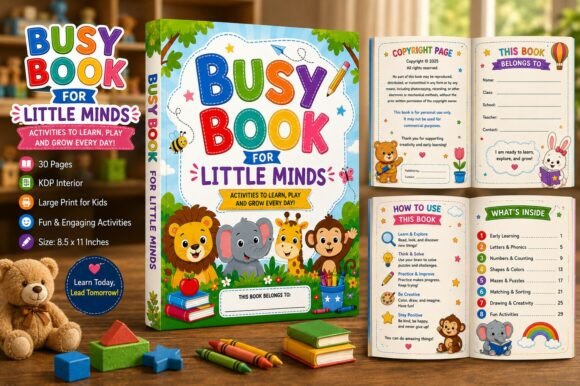
At its core, Busy Book for Little Minds is a collection of interactive exercises designed for preschoolers and early learners. The activities span alphabet tracing, shape recognition, matching games, missing letter exercises, mazes, spot the difference puzzles, hidden object challenges, connect the dots, color by number pages, pattern practice, cut and paste activities, and scissor skills practice. Each page aims to develop a specific skill through hands-on engagement.
What makes it distinct is the range of activities within a single book. Rather than buying separate workbooks for letter tracing, another for mazes, and a third for cutting practice, this planner consolidates them into one resource. This can be convenient for parents who want variety without managing multiple products.
The activities are designed to be completed with simple tools: crayons, scissors, glue, and a pencil. No screens, no batteries, no subscriptions. That alone appeals to many families looking to reduce screen time and encourage fine motor development.
How It Compares with Other Early Learning Resources
To understand whether Busy Book for Little Minds is the right fit, it helps to consider the broader landscape of early learning resources. Parents typically choose from several categories, each with its own strengths.
Traditional Workbooks vs. Busy Book for Little Minds
Standard preschool workbooks often focus narrowly on one or two skills, such as letter writing or number recognition. They tend to be linear: you start at page one and work through sequentially. Busy Book for Little Minds offers more variety within a single volume, which can help maintain a child's interest over longer periods. A child who gets bored with tracing can switch to a maze or a cut-and-paste activity without switching books.
However, traditional workbooks sometimes provide more repetition for skill mastery. If your child needs extensive practice on letter formation, a dedicated tracing workbook might offer more pages on that specific skill. Busy Book for Little Minds provides alphabet tracing but balances it with many other exercises, so the depth per skill is necessarily limited by the book's breadth.
Digital Learning Apps vs. Busy Book for Little Minds
Apps like ABCmouse, Khan Academy Kids, or Endless Alphabet offer interactive, adaptive learning with animations and instant feedback. Many children find them highly engaging. But they come with screen time concerns, subscription costs, and the risk of passive consumption rather than active creation.
Busy Book for Little Minds is screen-free and hands-on. Cutting, gluing, tracing, and coloring involve physical manipulation that supports fine motor development in ways a touchscreen cannot replicate. For families limiting screen exposure, this is a meaningful advantage. On the other hand, apps can track progress and adjust difficulty automatically, which this book cannot do. It requires a parent or caregiver to guide the child and decide when to move to more challenging activities.
DIY Printable Activities vs. Busy Book for Little Minds
Many parents find free or low-cost printable activity sheets online. Sites like Teachers Pay Teachers, Pinterest, and educational blogs offer thousands of individual worksheets. This approach gives you complete control to select exactly what your child needs, but it also requires time to search, print, and organize materials. You also need to ensure the printables align developmentally.
Busy Book for Little Minds saves that time by providing a curated, printed, and bound collection. It is ready to use out of the box. The tradeoff is flexibility: you cannot pick and choose only certain activity types. You get the full set, and if your child dislikes mazes, for example, those pages may go unused.
Other Busy Books and Activity Planners
The market includes many similar products under names like "preschool busy book," "quiet book," or "activity binder." Some are reusable with dry-erase markers and velcro pieces, designed for repeated use. Others are single-use consumable workbooks. Busy Book for Little Minds falls into the consumable category: children write, cut, and paste on the pages, so each book is used once.
Reusable busy books are typically more expensive upfront but can be used by multiple children or revisited after months of practice. They also tend to focus on manipulatives like felt pieces, buttons, or laminated cards, which offer tactile variety. Busy Book for Little Minds offers paper-based activities that require a child to hold a pencil or use scissors, which directly builds handwriting and cutting readiness. The best choice depends on whether you value reusability or fine motor practice more highly.
Strengths of Busy Book for Little Minds
- Variety: The range of activities covers multiple skill domains, from literacy and numeracy to logic and motor skills. This keeps children engaged and exposes them to different types of thinking.
- Skill progression: Activities like alphabet tracing and connect the dots follow a logical sequence, helping children practice foundational skills in a structured way.
- Fine motor focus: Cutting, tracing, and coloring exercises directly support pre-writing development. For children who need to strengthen hand muscles, this is a practical tool.
- Screen-free: In an era of digital saturation, a paper-based activity book offers a welcome break while still being educational.
- Parent-friendly: You do not need to prepare materials or research activities. Open the book and start.
Tradeoffs and Limitations
- Single use: Once pages are drawn on, cut, or glued, the book cannot be reused. If you have multiple children or want to repeat activities, you would need additional copies.
- Limited depth per skill: Because the book covers many activity types, it offers fewer pages per skill than a specialized workbook. A child who struggles with pattern recognition might need supplemental practice elsewhere.
- No adaptive difficulty: Unlike digital apps that adjust based on performance, this book offers the same activities in the same order each time. You will need to decide when your child is ready for more challenging work.
- Requires adult guidance: Younger preschoolers may need help understanding instructions, especially for cut-and-paste or spot-the-difference tasks. The book is not designed for independent use by all children.
- Physical storage: A bound book can be bulky, and once pages are cut out, keeping them organized requires some effort.
When Busy Book for Little Minds Is a Strong Choice
This activity planner works well for families who want a single, ready-to-use resource that keeps a preschooler engaged during short learning sessions. It is especially useful for:
- Building fine motor confidence: If your child is learning to hold a pencil, use scissors, or color within lines, the hands-on activities provide meaningful practice.
- Supplementing preschool or kindergarten: Teachers or parents who want extra activities aligned with early learning standards can use specific pages to reinforce classroom lessons.
- Quiet time or travel: The book can be pulled out during car rides, restaurant waiting times, or when you need a calm, focused activity.
- Screen-free days: Families aiming to reduce screen time often appreciate having engaging alternatives that do not involve a device.
When Another Option May Be Better
There are also scenarios where Busy Book for Little Minds may not be the ideal fit:
- If you need reusable materials: A laminated busy book with velcro pieces or a dry-erase workbook may be more cost-effective for multiple children or repeated practice.
- If your child needs intensive practice in one area: A child struggling specifically with letter recognition or number sequencing may benefit from a specialized workbook with more repetition.
- If you prefer digital learning: Apps offer interactivity, audio prompts, and progress tracking that paper cannot match. Some children also respond better to digital formats.
- If you want open-ended creative play: This book provides structured activities with clear outcomes. For imaginative, open-ended play, art supplies, building blocks, or dramatic play materials may be more appropriate.
Practical Factors to Consider Before Buying
Age range matters. The activities are designed for preschoolers roughly ages three to five, but every child develops differently. A three-year-old may find cutting and mazes frustrating, while a five-year-old may breeze through them. Look at sample pages if possible, and consider your child's current skill level, not just their age.
Your child's temperament also plays a role. Some children love structured worksheets and feel a sense of accomplishment completing each page. Others resist paper tasks and prefer physical play or storytelling. If your child falls into the latter group, this book might feel like a chore rather than fun. In that case, integrating activities into play or using a different format could work better.
Consider how much time you can dedicate to guided activities. While some children can work independently on familiar tasks like coloring or connect the dots, others need step-by-step explanation and encouragement. If you have limited bandwidth for one-on-one time, a simpler set of materials or a different approach may be more manageable.
Making a Decision That Fits Your Child and Your Family
Choosing a learning resource for your preschooler is not about finding the "best" option in an absolute sense. It is about finding what aligns with your child's developmental stage, learning style, and interests, as well as your family's values and daily routine.
Busy Book for Little Minds offers a broad, screen-free, fine-motor-focused experience that works well for many families. It is especially strong for parents who want variety and structure without the hassle of assembling materials. However, it is not the only path, and for children who need deeper practice in specific areas, or for families who prefer reusable or digital formats, other resources may serve better.
If you are comparing options, try to see actual activity pages, read reviews from parents with similar-aged children, and consider what your child actually enjoys doing. A resource that gets used regularly, even if it is not the most comprehensive, will always be more valuable than one that sits on a shelf.
Ultimately, the best early learning tool is the one that meets your child where they are and helps them take the next small step forward with confidence and curiosity. Busy Book for Little Minds can be that tool for many families, especially those prioritizing hands-on, screen-free skill building in the preschool years.