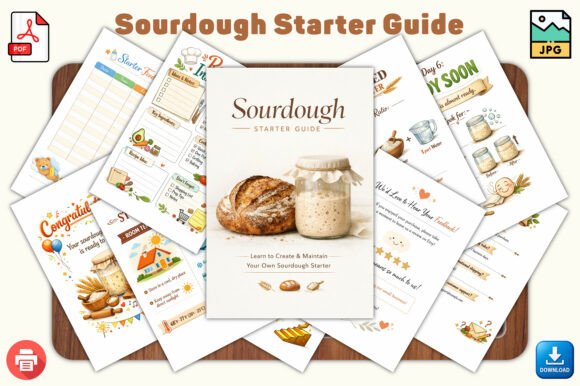
Sourdough Starter Guide: Your Companion for Natural Baking at Home
There’s something almost magical about watching a bubbling jar of flour and water transform into a living, breathing starter that can leaven your bread for years. But the path from first mix to that first gorgeous, crusty loaf isn’t always intuitive. That’s exactly where the Sourdough Starter Guide steps in — not as another intimidating recipe book, but as a gentle, day-by-day companion for anyone curious about creating their own natural starter at home. Whether you’ve never touched a bag of flour or you’ve tried (and failed) before, this digital guide is built around real-life situations and genuine help.
The Home Baker’s New Morning Ritual
Imagine waking up on a Saturday morning, walking into your kitchen, and seeing your starter bubbling happily in its jar. That’s the moment when a new hobby becomes a lifestyle. The Sourdough Starter Guide walks you through exactly how to get there — from mixing the first tablespoon of flour and water to knowing when your starter is ready to bake. For someone who loves the idea of homemade bread but feels overwhelmed by conflicting advice online, this guide offers clarity. It doesn’t assume you know what “stiff peak” or “autolyse” means. Instead, it uses simple language and breaks the process into manageable steps, day by day.
One reader I know kept her printed copy taped to her kitchen cabinet for the first week. She’d glance at it while feeding her starter, following along with the minimal, clean layout that doesn’t scream for attention. That’s the kind of resource this is — practical enough to use while your hands are covered in dough, small enough to prop up next to your mixing bowl.
When Life Gets Busy: Maintaining a Starter Without Stress
Life happens. You forget to feed your starter for two days. You go on vacation. You run out of whole wheat flour. The Sourdough Starter Guide acknowledges these very human moments and provides straightforward maintenance guidance that doesn’t guilt you into perfection. It includes feeding schedules, tips for storing your starter in the fridge when you need a break, and advice on reviving a neglected starter. This is gold for the 20-to-50 crowd juggling work, kids, or just a packed schedule.
I’ve talked to people who stopped baking because they thought a starter was too demanding. The truth is, a well-maintained starter is surprisingly forgiving. The guide’s feeding log pages let you track what you did and when, so if something goes off, you can look back and adjust. It’s not about rigid rules — it’s about understanding what your starter needs and building a rhythm that fits your actual life.
From Discard to Delicious: Creative Ways to Use Your Excess
Every sourdough baker eventually faces a little jar of discard — the portion you remove before feeding. Instead of tossing it, the guide includes bonus ideas for using sourdough discard. This is where the eBook really shines for the resource-conscious home baker. You can turn discard into pancakes, crackers, pizza crust, or even muffins. No waste, just more delicious experiments in your kitchen.
For someone who loves cooking but hates throwing away food, the discard suggestions are a game-changer. One friend keeps her discard jar in the fridge and makes sourdough pancakes every Sunday. She never planned to be that person, but the guide made it easy enough to try once — and now it’s a family tradition. That’s the kind of real-world transformation this guide enables: it turns a daily chore into a creative outlet.
A Gift That Keeps on Giving: Sharing Your Starter
One of the most rewarding aspects of sourdough is passing on a bit of your starter to a friend. The Sourdough Starter Guide makes this easy by teaching you how to portion, dehydrate, or simply gift a live starter with confidence. Whether you want to give a friend a jar of bubbly excitement for their birthday or you’re the designated starter supplier at your local community bake swap, the guide ensures you get it right.
There’s a special joy in texting someone a photo of your first loaf and hearing, “It actually worked!” That shared experience is what this guide fosters — not just a skill, but a connection. Many users report that they bought the guide for themselves and ended up gifting it (along with a small jar of starter) to three other friends. It’s that kind of ripple effect that makes the natural baking community so welcoming.
Troubleshooting Without the Headache
If you’ve ever looked at your starter and wondered, “Why does it smell like acetone?” or “Should it really have a layer of hooch on top?” — you’re not alone. The guide includes a dedicated section on common problems and easy solutions. Instead of sending you down a rabbit hole of forum threads, it gives you one clear answer per issue. For example, a layer of dark liquid on top usually means it’s hungry. Feed it and it’s happy again. That simple.
This troubleshooting approach is extremely practical for beginners who might otherwise panic and throw away a perfectly good starter. One user told me she almost trashed a week-old starter because she thought the hooch meant it had spoiled. The guide’s one-sentence explanation saved her batch — and her confidence. That’s the kind of limitation-awareness this resource has: it knows where new bakers stumble and steps in right there.
Why This Guide Works for Different Experience Levels
Let’s be honest — not every beginner is the same. Some people are methodical and read every word before mixing. Others just want a two-sentence “what to do today” and will ignore the explanations until they need them. The Sourdough Starter Guide accommodates both styles. Its 30-page format is concise enough for the impatient baker yet thorough enough for the detail-oriented instructor. The page size (6×9 inches) and clean design make it easy to skim, with clear daily instructions that stand out.
I’ve seen it used in a college dorm kitchen where space is limited and every counter inch matters. I’ve also seen it used as a reference in a professional baking class for home enthusiasts. The guide doesn’t talk down to anyone, and it doesn’t assume you already know basic baking terms. It explains what you need to know when you need to know it — which is exactly what makes it so universally helpful.
One potential limitation is that it’s purely a starter guide — it doesn’t include full bread recipes beyond the starter process. If you’re looking for an all-in-one sourdough baking book, you might need to pair it with a separate bread recipe resource. But as a focused guide for the starter itself, it’s hard to beat. The bonus discard ideas do give you a solid start for using your extra, and the guide hints at next steps for baking, but it doesn’t dive into loaf shaping or scoring. That’s a trade-off that keeps the guide manageable and uncluttered.
A Clean, Printable Resource for Your Kitchen
The file formats include both PDF and JPG, meaning you can view it on your tablet, phone, or print a physical copy. Many users love printing it out, punching holes, and adding it to a binder. The minimal design means it looks good even in black and white on home printers. No fancy graphics that use too much toner — just clean text and simple layouts that focus on the information you need.
For someone who prefers a digital resource, the JPG files allow you to view individual pages on your phone while you’re at the counter. You can even drop the pages into a note-taking app for quick checking. The instant download means you can start your starter the same day you decide to try — no waiting for shipping, no running to the bookstore. That immediacy removes a barrier that stops many people from starting a new hobby.
Starting Your Own Sourdough Journey
The Sourdough Starter Guide is more than a set of instructions — it’s a catalyst for a hands-on, slow-food practice that many people find deeply satisfying. Whether you’re a beginner home baker looking for a reliable starting point, someone who loves natural fermentation and wants to deepen your understanding, or a cookbook collector who appreciates a clean, well-designed resource, this guide fits the bill. It doesn’t promise overnight success, but it does promise to walk with you through the ups and downs of your first week — and beyond.
If you’ve been hesitant to start because you worry about wasting flour or getting confused, this guide removes that anxiety. It assumes you’ll make mistakes — and it tells you how to fix them. That’s the kind of real-world approach that keeps people baking long after the first loaf comes out of the oven. And when you finally slice into that warm, tangy bread you made from scratch, you’ll know exactly why you started.