ADHD Space Transformation Guide: Create Calm, Focus & Flow in Your Environment
Living with ADHD often means navigating a world that wasn't designed with your brain in mind. Clutter builds up faster than you can manage it. Distractions lurk in every corner. The very space meant to support you ends up working against you, draining mental energy and making focus feel impossible. This isn't a personal failing—it's a mismatch between how your brain works and how your environment is set up. The good news is that small, intentional changes can shift everything. That's exactly where the ADHD Space Transformation Guide comes in, offering a practical, visually engaging roadmap to turn your space into a sanctuary of calm and productivity.
Why Your Environment Matters More Than You Think for ADHD Management
Your surroundings directly shape your mental state. For neurodivergent minds, the connection between environment and executive function is especially strong. A chaotic room can trigger overwhelm before you even start a task. Visual noise competes for attention, making it hard to prioritize. Sensory input—like harsh lighting, cluttered surfaces, or mismatched sounds—can spike anxiety or cause shutdown. On the flip side, a thoughtfully arranged space reduces cognitive load. It signals safety, clarity, and readiness. The ADHD Space Transformation Guide recognizes this dynamic and offers more than generic organizing advice. It delivers strategies tailored to how ADHD brains actually process space, structure, and routine.
Many people assume that organization requires rigid perfectionism. That belief often stops them before they begin. But this guide takes a different route. It accepts that some mess is okay. It prioritizes function over aesthetics. It understands that systems only work if they're easy to maintain, especially on low-energy days. That flexibility is what makes it genuinely helpful rather than aspirational.
What Makes the ADHD Space Transformation Guide Unique
At first glance, you might think this is just another organization eBook. Look closer, and you'll see something different. The guide is designed specifically for ADHD brains, which means it avoids the common pitfalls of traditional organization advice. It doesn't assume you have endless willpower or perfect follow-through. Instead, it meets you where you are.
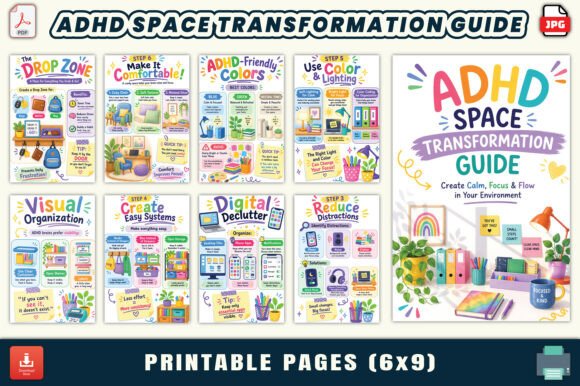
One standout feature is its format. The 30-page eBook comes in both JPG and PDF formats, sized perfectly at 6×9 inches. The design uses clean white backgrounds with colorful, minimal elements—a balance that keeps things engaging without overwhelming your senses. The layout is easy to read, with a structure that doesn't demand linear focus. You can jump to the section you need most right now. Whether you're dealing with a cluttered desk, a chaotic kitchen, or a bedroom that never feels restful, the guide offers actionable steps without judgment.
It also includes bonus planning and tracking pages. These aren't generic printable sheets. They're designed to work with ADHD tendencies like time blindness, task paralysis, and the challenge of maintaining routines. You'll find daily and weekly reset routines that are realistic, not aspirational. The guide understands that consistency doesn't mean perfection—it means showing up imperfectly, again and again.
Simple Decluttering Methods Without the Overwhelm
Decluttering is often the hardest part of any space transformation. For someone with ADHD, the mere thought of sorting through piles can trigger avoidance. The ADHD Space Transformation Guide addresses this head-on with methods designed to reduce friction. Instead of expecting you to tackle an entire room in one go, it breaks things down into micro-tasks. You might start with one drawer, one shelf, or one corner. The goal isn't a magazine-ready space—it's a space that works for you.
One technique involves sorting items by how they make you feel rather than by arbitrary categories. This emotional approach aligns well with ADHD decision-making patterns. If an object causes guilt, anxiety, or exhaustion, it may not belong in your daily environment. Another method focuses on visibility. Out of sight often means out of mind for ADHD brains, so the guide encourages open storage where appropriate. Seeing your tools, supplies, or clothes can actually reduce the mental effort of remembering what you own.
It also addresses the paradox of "organizing supplies." Buying bins, labels, and dividers can feel productive, but it often becomes another form of procrastination. The guide helps you avoid that trap by prioritizing function first. You only add storage solutions after you've decided what deserves a place in your space.
Organization Systems That Actually Work for ADHD
Standard organization advice often fails neurodivergent people because it relies on habits that are hard to sustain. The ADHD Space Transformation Guide offers systems that work with your brain, not against it. For example, it recommends creating "landing zones" where essential items live. These are specific, visible spots for keys, wallets, phones, and bags. When everything has a home that makes sense, you spend less time searching and more time doing.
Another key principle is the "one-touch" rule revisited. Instead of handling an item multiple times before deciding where it goes, the guide encourages immediate placement. This reduces the mental load of tracking decisions across hours or days. For digital spaces, it offers similar logic—organizing files and bookmarks in ways that match natural workflow rather than rigid folder hierarchies.
The guide also emphasizes the power of anchors. These are consistent routines tied to specific triggers. For instance, you might pair your morning coffee with a five-minute tidy of your workspace. The coffee becomes the cue; the tidy becomes the automatic response. Over time, these micro-habits build momentum without requiring constant willpower.
Reducing Distractions and Improving Focus Through Spatial Design
Distraction isn't just about willpower—it's about what your environment allows. The ADHD Space Transformation Guide dives into how to design for focus. This goes beyond simply clearing your desk. It involves understanding what captures your attention and either removing those triggers or strategically placing them. For example, if your phone is a constant pull, the guide suggests creating a designated spot for it outside your workspace. If visual clutter distracts you, it recommends clear surfaces and closed storage for items you don't need in the moment.
Lighting matters more than most people realize. Harsh overhead lights can cause sensory discomfort, while dim lighting can sap energy. The guide offers recommendations for layering light—using task lamps, warm bulbs, and natural light where possible. Sound is another consideration. Some ADHD brains need silence; others need background noise. The guide helps you identify your preference and adjust your space accordingly, whether that means noise-canceling headphones, a white noise machine, or strategically placed speakers for focus music.
Even the placement of furniture can support or undermine focus. The guide discusses how to arrange your workspace so that your back faces distractions and your view is calming. These small spatial shifts can reduce the number of times your attention gets pulled away during a work session.
Creating Calming, Sensory-Friendly Spaces
Sensory processing differences are common in ADHD. Bright colors, strong smells, or rough textures can feel overwhelming. The ADHD Space Transformation Guide includes a thoughtful approach to sensory-friendly design. It encourages you to choose colors that soothe rather than stimulate, especially in spaces meant for rest or focus. Soft blues, muted greens, and warm neutrals often work well. Textures matter too—soft fabrics, natural materials, and comfortable seating can make a room feel safer and more inviting.
The guide also addresses clutter as a sensory issue. When too many objects compete for visual attention, the brain struggles to filter. This is especially draining for ADHD minds. The solution isn't to live in a sterile environment—it's to curate what you see. Rotating decor seasonally, using trays to group small items, and keeping surfaces mostly clear can reduce sensory overload without making your space feel cold or impersonal.
Scent is another often-overlooked factor. Certain smells can trigger calm or alertness. The guide suggests experimenting with essential oils or candles in a controlled way, so scent becomes a tool rather than an assault. Lavender for winding down, peppermint or citrus for focus—these small additions can shift your mental state without requiring major effort.
ADHD-Friendly Storage and Visual Organization Tips
Traditional storage solutions often fail because they prioritize hiding things away. For ADHD brains, out of sight can literally mean out of existence. The ADHD Space Transformation Guide flips this assumption. It recommends open shelving, clear bins, and labeled containers that make inventory easy at a glance. When you can see what you have, you're less likely to buy duplicates or forget about useful items.
Labels are a powerful tool, but only if they're used consistently. The guide suggests simple, large-font labels with words or even pictures. Color-coding can also help, especially for categories like work supplies, hobby materials, or daily essentials. The key is to make the system intuitive rather than decorative. A label that looks beautiful but is hard to read won't help you on a busy morning.
Visual organization also extends to digital spaces. The guide offers tips for organizing computer files, email inboxes, and even phone apps. The same principle applies: make important things easy to find and less important things easy to ignore. Folder names should be action-oriented, not vague. Bookmarks should be grouped by project, not by topic. These small adjustments save mental energy over time.
Daily and Weekly Reset Routines That Stick
Routines are essential for maintaining any organized space, but traditional routines often demand too much. The ADHD Space Transformation Guide offers resets that are realistic for neurodivergent lives. A daily reset might take only five minutes. You might clear your desk, put away one pile, or wipe down a surface. The goal isn't a perfect space—it's a space that's ready for tomorrow.
Weekly resets are a bit more involved but still manageable. The guide suggests dedicating 15 to 30 minutes to tasks like returning misplaced items, refreshing your visual organization system, and reviewing your planning pages. These resets are designed to be flexible. If you miss a week, you pick up the next week without guilt. The routine serves you, not the other way around.
The guide also includes bonus planning and tracking pages that make these resets easier. You can track which systems are working, which need adjustment, and how your energy levels fluctuate. Over time, this data helps you refine your environment to match your actual needs, not your idealized ones.
Who Can Benefit from This Guide
While the ADHD Space Transformation Guide is obviously valuable for individuals with ADHD, its reach extends further. Productivity lovers who struggle with maintaining systems will find practical strategies. Home organization enthusiasts who want a neurodivergent-friendly perspective can learn a lot. Digital product sellers, coaches, therapists, and planners can use this guide as a resource for their clients or audiences. The design and content are professional enough for commercial use while remaining accessible for personal transformation.
For therapists and coaches, this guide fills a specific gap. Many clients with ADHD want to organize their spaces but don't know where to start. Handing them a generic organization book often backfires—it adds pressure without providing real support. This guide offers a compassionate, practical alternative that respects the realities of ADHD. For digital product sellers, the high-quality design, print-ready format, and appealing aesthetic make it a strong addition to any product line focused on wellness, productivity, or neurodiversity.
Practical Considerations Before You Start
Before diving into any space transformation, it helps to set realistic expectations. The guide is not a quick fix—it's a framework for ongoing adjustment. Your first attempt at organizing might not stick. That's normal. The key is to treat each iteration as data, not failure. The ADHD Space Transformation Guide supports this iterative mindset. It doesn't promise overnight results. It promises a process that respects your brain's wiring.
You should also consider your current energy levels and executive function capacity. Starting small is always better than starting big and burning out. The guide's structure allows you to focus on one area at a time. Maybe you begin with your workspace this month and your bedroom next month. There's no deadline. The only rule is that your environment should serve you, not the other way around.
Finally, remember that transformation doesn't require perfection. A slightly messy space that supports your focus is better than a pristine space that drains your energy. Use the guide as a tool for exploration, not a prescription for conformity. Your space is yours to shape. With the right guidance, you can make it a place where calm, focus, and flow naturally emerge.
For anyone ready to move from overwhelm to ease, the ADHD Space Transformation Guide offers a compassionate, practical, and visually inviting path forward. Whether you're designing for yourself, your clients, or your audience, this resource turns intention into action—one small, meaningful change at a time.