Kids Household Responsibility Chart for Building Independence
Helping children learn responsibility at home is one of the most rewarding challenges parents and caregivers face. A structured system that tracks chores, school tasks, and daily routines can make this process smoother for everyone. The Kids Household Responsibility Chart KDP is a fully editable Canva template designed to guide kids toward independence while keeping the entire family organized. Whether you are a parent new to chore charts or an experienced educator looking for classroom tools, this resource offers flexibility and practical support.
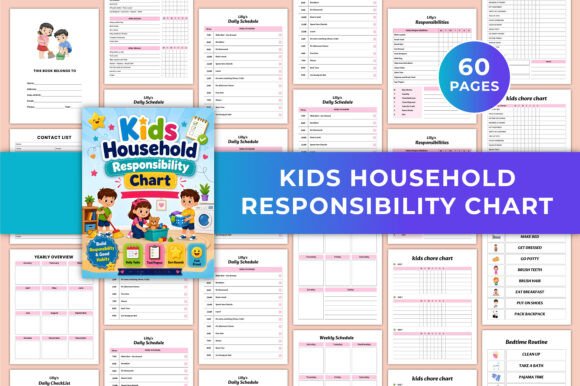
This chart system moves beyond simple checklists. It includes a yearly overview, contact lists, daily and weekly planners, school day routines, reward tracking, and behavior notes. Because it is fully editable, you can adjust fonts, colors, and layouts to match your child’s age, personality, and your family’s rhythm. The goal is not perfection but consistent, positive habit formation.
Why a Responsibility Chart Matters for Different Families
Every household has its own culture and priorities. A family with young children may need a chart that emphasizes morning and bedtime routines, while a household with older kids might focus on school tasks and independent chores. The beauty of a customizable template is that it adapts to these varying needs without forcing a one-size-fits-all structure.
For parents who feel overwhelmed by daily chaos, a clear chart reduces the mental load of reminding children about every task. For kids, seeing their progress visually builds confidence and a sense of accomplishment. The reward system embedded in the chart motivates positive behavior without relying on constant verbal reminders.
Parents and Caregivers Seeking Routine and Consistency
If you are a parent juggling work, school drop-offs, and household management, you likely crave systems that run on autopilot. This chart helps you establish predictable daily routines. The morning and bedtime pages are especially useful for young children who thrive on structure. You can print the pages and place them on a wall or use them digitally on a tablet.
The behavior-based tracking pages allow you to note patterns. For example, if a child consistently struggles with afternoon tasks, you can adjust the schedule or offer extra support. The chart becomes a conversation starter rather than a source of conflict. Over time, children internalize the routines and need fewer external prompts.
Educators and Homeschooling Parents
Teachers and homeschooling families can use this chart to bridge home and school responsibilities. The school day checklist divides tasks into before school, after school, and bedtime, which helps children transition smoothly between environments. For homeschoolers, the daily schedule with time-based planning keeps lessons and breaks on track.
You might use the contact list pages for emergency information or co-op group details. The yearly overview can map out long-term goals, like reading challenges or science projects. Because the template is editable, you can create multiple versions for different children or subjects without starting from scratch.
Creators and KDP Publishers
If you create and sell digital products on platforms like Amazon KDP, this template offers commercial value. You can customize the design with your branding, fonts, and color palette, then publish it as a low-content or medium-content book. The built-in pages cover everything from chore tracking to reward systems, which are popular niches in parenting and organization markets.
You might also bundle the chart with other resources, such as meal planners or activity logs, to create a comprehensive home management journal. The editable Canva format means you do not need advanced design skills to produce a polished product. Speed and reliability matter when you are publishing multiple titles, and this template streamlines that process.
Key Features That Support Different Goals
Understanding the features helps you decide whether this chart matches your specific needs. Below are the highlights and how they serve different users.
Yearly Overview and Contact Pages
The yearly overview gives a big-picture view of goals and events. Parents can mark holidays, school breaks, and appointment reminders. For creators, this page adds value to a KDP book because it makes the product feel like a complete yearly journal. Contact list pages are practical for emergency information and can also serve as a quick reference for babysitters or relatives.
Daily and Weekly Schedules
The daily checklist covers morning, afternoon, and evening routines. This is helpful for families with multiple children who need to follow staggered schedules. The weekly schedule planner works well for planning extracurricular activities, homework deadlines, and screen time limits. Educators can use the weekly layout to plan lessons or household contributions.
Chore Charts and Reward Systems
The chore tracking pages list daily and weekly responsibilities. You can assign different chores to different children or rotate tasks to build varied skills. The reward chart uses a points or goal system, which appeals to kids who thrive on clear incentives. For parents who prefer intrinsic motivation, you can use the chart without rewards and focus on completion and praise.
Behavior-based task tracking pages allow you to note effort, attitude, and improvement. This is especially useful for children with ADHD or executive function challenges, as it breaks down expectations into manageable steps. The notes pages give you space to record observations or celebrate milestones.
Practical Examples for Different Reader Types
Let’s look at how three different users might set up the chart for their unique circumstances.
A busy parent of a kindergartner: You print the morning routine page and place it near the bathroom mirror. Your child checks off brushing teeth, getting dressed, and making the bed. The reward system uses stickers for each completed morning. After five stickers, your child chooses a weekend activity. The school checklist helps pack the backpack and prepare lunch the night before. Over a month, your child needs fewer reminders, and mornings become calmer.
A homeschool parent with two children: You create separate charts for each child using the editable template. The daily schedule includes time blocks for math, reading, art, and outdoor play. The chore chart rotates weekly so both children learn cooking, dusting, and pet care. The behavior tracking pages help you note which subjects cause frustration and which spark curiosity. You use the yearly overview to plan unit studies and field trips.
A KDP publisher launching a parenting journal: You choose a pastel color palette and add your logo to each page. You reorganize the pages to start with the reward chart, then move to daily routines, and end with notes. You add a table of contents and test the print layout. After publishing, you monitor customer reviews to see which pages parents find most useful. You later create a French-language version using the same template structure.
Evaluating Ease of Use, Flexibility, and Long-Term Value
When choosing a responsibility chart, consider how much time you want to invest in setup and maintenance. This template is easy to customize in Canva, which is free to use with a browser. If you are not design-savvy, you can stick with the existing layout and only change the child’s name and tasks. Experienced users can adjust every element, from font sizes to page order.
Cost is another factor. A single template purchase gives you lifetime access, and you can print or use it digitally as many times as you need. For creators, the commercial license allows you to sell the customized product, making it a low-cost business investment. The quality of the PDF output depends on your print settings, but the resolution is suitable for home printers or professional printing.
Long-term usefulness depends on how the chart grows with your child. Younger kids need simple pictures and few tasks, while older children can handle detailed schedules and multiple responsibility categories. Because the template is editable, you can create a new version each year. The reward system can shift from stickers to screen time or allowance as your child matures.
Does This Chart Match Your Goals and Skill Level?
If you are new to using responsibility charts, this template is beginner-friendly. You do not need to design anything from scratch. Simply open Canva, type in your child’s tasks, and print. The structure guides you without overwhelming you with options. If you are an experienced user who wants full control, the editable format gives you that freedom.
Consider your child’s age and personality. Kids who respond well to visual cues and clear expectations will benefit from a chart that is displayed prominently. Children who resist structure may need a simplified version with fewer tasks and more frequent rewards. You can experiment with different layouts until you find what clicks.
Your own comfort with technology matters too. Canva is intuitive, but if you prefer not to edit templates, you can use the PDF as is and write tasks by hand. The template works for both approaches.
Final Thoughts on Building Responsibility at Home
A Kids Household Responsibility Chart is more than a piece of paper or a PDF—it is a framework for teaching life skills in a consistent, supportive way. The editable Canva template makes it possible to tailor the experience to your family’s values and your child’s development. Whether you are a parent seeking calm mornings, a teacher organizing classroom chores, or a creator building a product line, this tool offers practical solutions.
The best system is one you actually use. Start with one page, such as the morning routine or the reward chart, and expand as your child builds confidence. Over time, the habit of checking tasks and celebrating progress becomes second nature. That is the real goal: raising independent kids who feel capable and proud of their contributions at home.