Smart Organization Skills for Kids: Evaluating the Workbook Approach to Building Lifelong Habits
When you are researching ways to help a child stay on top of schoolwork, manage their time, or take on more responsibility at home, it can be difficult to know where to begin. Some resources lean heavily on parent-directed routines. Others rely on digital tools that children quickly outgrow or lose interest in. The Smart Organization Skills for Kids workbook positions itself as a middle ground—a print-based, interactive resource that blends practical planning tools with confidence-building activities. Understanding how this type of workbook compares with other approaches can help you determine whether it fits your child's needs and your family's rhythm.
What Smart Organization Skills for Kids Offers
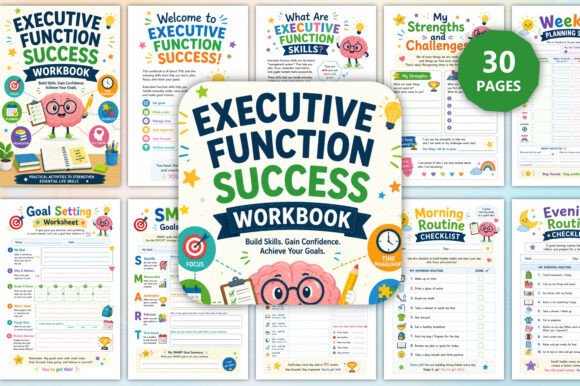
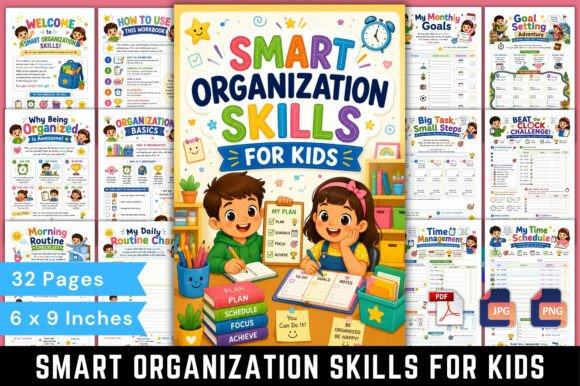
At its core, this workbook is a collection of structured pages designed to teach children how to organize their daily routines, plan ahead, manage responsibilities, and build healthy habits. It includes daily routine charts, weekly planners, goal-setting pages, school organization tools, habit trackers, and reflection exercises. Each activity is intended to be completed by the child, with guidance from an adult when needed, making it a hands-on tool rather than a passive reading experience.
What distinguishes Smart Organization Skills for Kids from many other resources is its emphasis on confidence-building through small, achievable wins. Rather than simply telling a child what to do, the workbook asks them to check off completed tasks, reflect on their progress, and set personal goals. This design aligns well with what developmental research suggests: children build self-regulation skills more effectively when they feel a sense of ownership over their routines.
How the Workbook Compares to Other Organization Tools for Children
Parents and educators typically have several categories of resources to choose from when trying to teach organization skills. Understanding where Smart Organization Skills for Kids fits within this landscape can help you evaluate its strengths and limitations.
Digital Apps and Online Trackers
Digital tools offer convenience and often include gamification elements that appeal to children who are already comfortable with screens. Apps can send reminders, track progress automatically, and provide visual rewards. However, they also come with tradeoffs. Screen time is a growing concern for many families, and digital tools can be distracting if a child is inclined to wander into other apps. Additionally, some children respond better to tangible, physical activities they can hold and write on. The workbook format removes the screen variable entirely, which may be a deciding factor if you are trying to reduce overall device use in your household.
Parent-Created Systems
Some families prefer to design their own organization systems using printable charts, whiteboards, or simple notebooks. This approach is highly customizable and often costs very little. The main limitation is the time and consistency required from the parent. Creating, maintaining, and updating a homegrown system can become difficult to sustain, especially during busy periods. A structured workbook like Smart Organization Skills for Kids offers a ready-made framework that saves you the design work while still allowing for personalization through writing and coloring activities.
School-Provided Planners
Many schools supply assignment notebooks or planners, particularly for upper elementary and middle school students. These are useful for tracking homework but rarely address broader skill areas such as habit formation, goal setting, or emotional reflection. The workbook expands beyond school tasks to include morning and evening routines, responsibility checklists, and healthy habit challenges. For parents who want their child to develop organization skills that apply to home life and personal growth as well as academics, this broader scope can be a meaningful advantage.
Books About Organization for Children
There are many children's books that teach organization through stories, characters, and narrative lessons. These can be engaging and help a child understand why organization matters. However, they rarely include actionable, repeatable activities. A child might finish a book feeling inspired but lack a concrete tool to apply what they have learned. The workbook bridges that gap by combining explanatory prompts with practical exercises the child can use immediately.
Strengths of the Workbook Approach
Smart Organization Skills for Kids offers several clear benefits for families looking to build structure without rigidity.
- Physical interaction supports memory and engagement. Writing things down by hand has been shown to improve retention and follow-through compared to typing or tapping. For many children, the act of checking a box or putting pen to paper reinforces the behavior they are trying to learn.
- Gradual skill building. The workbook introduces concepts in manageable steps. A child does not need to master weekly planning before they have practiced daily routines. This sequential design reduces overwhelm and builds confidence incrementally.
- Built-in reflection. The reflection exercises encourage children to think about what worked, what didn't, and how they might adjust. This metacognitive component is often missing from simpler checklists and is a key factor in developing independent self-management.
- Low-tech and portable. The workbook can be used anywhere—at the kitchen table, in the car, or during quiet time—without requiring Wi-Fi, charging, or supervision of screen content.
Tradeoffs and Limitations to Consider
No single resource works for every child or every family situation. Being aware of the potential limitations of a workbook-based approach can help you decide whether it will be effective in your context.
It requires adult involvement to get started. While the workbook is designed for children, most young kids will need a parent or caregiver to walk them through the initial pages, explain how to use the planners, and help set up their tracking systems. If your schedule is extremely tight, or if you are looking for a resource your child can use entirely independently from day one, the workbook may feel like an additional demand on your time.
Not all children respond to worksheets. Some children thrive with open-ended play, movement-based learning, or verbal discussion. For these kids, sitting down with a workbook may feel like an extension of schoolwork rather than a fun or rewarding activity. The workbook's colorful design and variety of activities help mitigate this, but it is not a universal fit. If your child resists any form of structured paper activity, you may need to pair the workbook with other approaches or use it sparingly.
It does not address underlying executive function challenges. For children with diagnosed conditions such as ADHD, anxiety, or learning differences that affect executive function, a workbook is a supportive tool but not a substitute for professional strategies or accommodations. In these cases, the workbook may work best as a supplement to guidance from an occupational therapist, school psychologist, or other specialist who can tailor approaches to the child's specific needs.
The format is fixed. Unlike a digital app that can adjust difficulty levels or change its interface, the workbook is a static product. Once the pages are filled, the child either needs a new workbook or must transition to a different system. Some families find that using the workbook for one or two cycles is enough to establish habits, after which they switch to a simpler planner or a digital tool. Others may wish the workbook were reusable or offered more advanced content for older children.
When Smart Organization Skills for Kids May Be the Right Choice
Based on the feedback and use cases shared by parents and educators, this workbook tends to work best in the following situations:
- Your child is between roughly ages 6 and 11 and is beginning to take on more independence with routines, homework, and chores.
- You want a structured, no-screen option that can be used consistently at home.
- Your child responds well to visual trackers, checklists, and the satisfaction of marking progress.
- You are looking for a resource that addresses not just school organization but also daily habits, responsibility, and confidence.
- You are willing to sit with your child for the first few sessions to help them understand how to use the planners and trackers.
When an Alternative Approach Might Be a Better Fit
In other scenarios, you may find that a different format or combination of resources serves your child better.
- If your child is very young (under 5) or has a short attention span for seated activities, a picture-based routine chart or a magnet board may be more accessible than a workbook.
- If your child is in middle school or older, they may outgrow the workbook's style and prefer a more mature planner or a digital calendar system.
- If you are primarily concerned with homework tracking and less with broader habit or confidence building, a school-style assignment notebook or a shared family calendar app may be more efficient.
- If your child has significant resistance to any form of structured planning, a play-based or game-based approach may need to come first before introducing a workbook.
Practical Considerations for Making a Decision
When evaluating whether Smart Organization Skills for Kids is worth trying, consider a few practical factors beyond the content itself.
Cost versus value. Compared to many digital subscription services that charge monthly fees, a one-time purchase of a workbook can be more economical, especially if it is used by multiple children in the household. Consider how many pages are included, how long the activities are likely to last given your child's pace, and whether the content feels durable enough to withstand daily use.
Complementing rather than replacing. You do not have to choose between the workbook and all other methods. Many families find success by using the workbook as a foundation—perhaps working through it over the summer or during a school break—and then transitioning to a simpler system once the habits are established. Others use the workbook alongside a digital timer or a morning routine chart for added structure.
Observing your child's response. If possible, look at sample pages or a preview of the workbook before committing. Some children are immediately drawn to the layout and activities; others may find it uninspiring. Pay attention to whether the language, illustrations, and activity types match your child's interests and reading level. A resource that feels too babyish or too advanced will quickly lose its effectiveness.
Building a Broader Skill Set Over Time
Teaching a child to be organized is rarely a one-time event. It is a process that unfolds over months and years, with plenty of setbacks and do-overs along the way. Resources like Smart Organization Skills for Kids can play a valuable role in that process by giving children a concrete, visual way to practice planning, tracking, and reflecting. But the workbook is only one piece of the puzzle. Consistent modeling from parents, clear expectations, and patience during the learning curve matter just as much, if not more.
Some of the most effective outcomes come from using a structured tool like this workbook as a springboard for conversations. When a child checks off a completed task or writes down a goal, it opens the door for you to ask questions, celebrate progress, and gently guide adjustments. Over time, the external structure of the workbook becomes internalized, and the child begins to plan and organize with less scaffolding. That gradual transfer of responsibility is ultimately the goal.
Final Thoughts on Choosing the Right Resource
If you are weighing options for helping your child develop organization, time management, and responsibility, Smart Organization Skills for Kids offers a balanced, low-tech approach that combines practical tools with confidence-building exercises. It is not a magic solution, and it will not replace the need for your involvement, but it can provide a structured starting point that many children find engaging and rewarding. For families who want a print-based resource that goes beyond homework tracking to address daily habits, goal setting, and self-reflection, it is a solid option worth considering.
As with any parenting resource, the best choice depends on your child's personality, your family's routines, and the specific skills you want to emphasize. By understanding what this workbook does well, where it may fall short, and how it compares with other common approaches, you can make a more informed decision that aligns with your child's needs and your own capacity to support them along the way.