Digital 2026 Cleaning Workbook: A Practical Guide to Building Consistent Routines
Keeping a home consistently clean without feeling overwhelmed is one of those goals that often slips through the cracks—not because we lack intention, but because we lack a structure that fits how we actually live. The Digital 2026 Cleaning Workbook KDP addresses this directly by offering a complete system of planners, schedules, checklists, and tracking tools designed to make cleaning a manageable part of your daily workflow rather than an exhausting event. Whether you're a freelancer juggling multiple projects, a busy parent keeping a household running, or a small business owner who needs a clear home environment to stay focused, this workbook provides the scaffolding to build routines that actually stick.
What the Digital 2026 Cleaning Workbook Offers
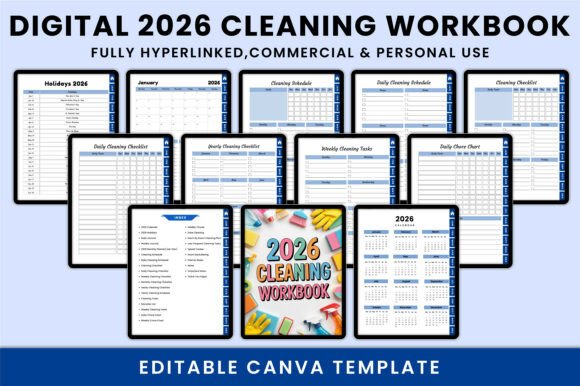
At first glance, the workbook appears to be a collection of planners and checklists—and it is—but its real value lies in how those elements connect to form a year-long system. The fully hyperlinked index gives you instant access to any section, which means you can jump from a monthly planner to a zone cleaning guide to a speed tracker in seconds. That kind of navigability transforms a static PDF into a working tool you can use daily without friction.
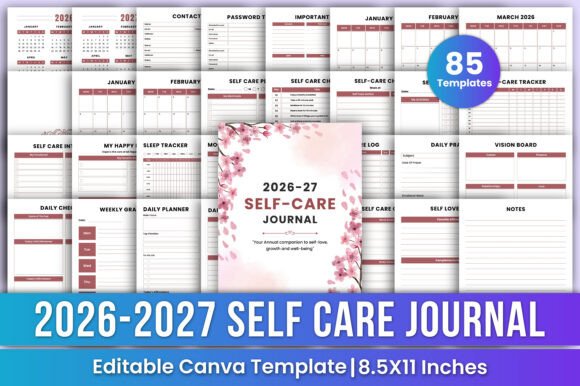
The workbook includes a 2026 calendar with holidays, monthly planners from January through December, daily and weekly journals, and a full suite of cleaning schedules: daily, weekly, monthly, and yearly. You also get chore charts, a room-by-room cleaning plan, zone cleaning guides, declutter lists, and even a speed tracker to measure how efficiently you're moving through tasks. With 40 different Canva templates included, you have the flexibility to customize the look and layout to suit your personal style or brand. The files come as PDF, JPG, and PNG formats, and the editable Canva link means you can tweak everything before printing or using digitally.
The page size is a standard 8.5 × 11 inches with no bleed, so it's print-ready whether you use a home printer or a professional service. This combination of structure and flexibility makes it suitable for anyone who wants a cleaner home with less stress—no guesswork, no forgotten corners, no mid-year burnout.
Where This Workbook Fits in a Broader Planning Workflow
Cleaning doesn't happen in a vacuum. It interacts with your work schedule, your energy levels, your family's routines, and your larger goals for the year. The Digital 2026 Cleaning Workbook KDP is designed to sit alongside other planning tools—your digital calendar, project management app, or daily journal—rather than replace them. You can use it as a standalone system or integrate it into a broader productivity workflow.
For example, if you already use a weekly review process where you assess tasks and priorities, the workbook's weekly cleaning checklist and chore chart can become part of that review. You don't need to duplicate effort. Simply open the relevant page, check off completed zones, and adjust the upcoming week's tasks based on what's happening in your work or personal life. The monthly planner helps you see cleaning alongside appointments, deadlines, and events, so you never schedule a deep clean on a week when you're launching a project or traveling.
The speed tracker and zone cleaning sections are particularly useful if you track time as part of your productivity system. You can time yourself on a zone, log it, and then use that data to estimate future cleaning blocks more accurately. Over time, this turns cleaning from a vague chore into a predictable, schedulable task that fits neatly into your existing routines.
Using the Workbook Before, During, and After Your Cleaning Cycles
One of the workbook's strongest features is that it supports the full arc of a cleaning cycle, not just the execution. Before you start a session, you can use the daily or weekly cleaning schedule to identify what needs attention. The room-by-room cleaning plan gives you a clear starting point if you're unsure where to begin. The declutter list helps you separate what needs to be discarded or donated before you can effectively clean a space. This preparation phase is often overlooked, but it saves time and reduces decision fatigue.
During the cleaning session, the checklists keep you on track. Instead of working from memory or getting sidetracked, you follow a structured list that matches the day's plan. The zone cleaning approach breaks the home into manageable areas, so you focus on one space at a time. The chore charts can be assigned to family members or housemates, making it a collaborative effort. For solo users, the checklist acts as a simple accountability tool—checking off a box provides a small sense of progress that keeps motivation up.
After the session, the daily journal and weekly journal give you space to reflect. Did a zone take longer than expected? Was there a recurring clutter spot that needs a system change? These notes feed back into the monthly planner and the yearly cleaning schedule, creating a continuous improvement loop. The less frequent cleaning tasks section ensures that quarterly or annual jobs—like cleaning behind appliances or washing windows—don't get forgotten because they're logged in the same system you use weekly.
Practical Implementation Tips for Long-Term Consistency
Getting the most out of the Digital 2026 Cleaning Workbook KDP comes down to a few practical decisions about how you integrate it into your routines.
Start with the yearly schedule and monthly planner. Block out the big cleaning events for the year—deep cleans, seasonal declutters, holiday preparation. Then, as each month approaches, use the monthly planner to break those into weekly tasks. This top-down approach prevents you from planning too much too quickly and helps you pace your energy across the year.
Use the speed tracker sparingly but consistently. You don't need to time every cleaning session. Instead, use it during your first week with the workbook to establish baselines for each zone or room. Once you know that the kitchen typically takes 45 minutes and the living room takes 25, you can schedule more accurately. Revisit the speed tracker every few months to see if your efficiency has improved or if a zone has become more demanding due to changes in how you use the space.
Leverage the editable Canva templates. If the pre-made designs don't perfectly match your aesthetic or if you want to add custom categories (like pet care areas or home office zones), the Canva link gives you full control. You can change colors, fonts, and layouts without starting from scratch. This is especially valuable for small business owners or creators who want the workbook to look cohesive with their brand or personal style.
Pair the workbook with a shared digital calendar if you live with others. Print or export the chore charts and weekly cleaning tasks, and assign them to specific people. When everyone can see what's expected and when, accountability improves without nagging. The daily chore chart is ideal for households with children, as it provides clear, age-appropriate tasks that build habits over time.
Review the planner notes and notes pages monthly. These sections are easy to ignore, but they're where the real customization happens. Write down what worked and what didn't. Note which checklists you skipped and why. Over the course of a few months, these notes will reveal patterns—maybe you consistently struggle with Tuesday evenings, so you shift cleaning to Wednesday mornings. That kind of adjustment is only possible when you have data, and the workbook's note sections are designed to capture exactly that.
Who Benefits Most from This Workbook
While anyone can use a cleaning planner, the Digital 2026 Cleaning Workbook KDP is especially well-suited for adults aged 20 to 50 who manage multiple responsibilities. If your schedule includes work projects, side hustles, creative work, family obligations, or ongoing learning, your cleaning routine needs to be efficient and adaptable. This workbook provides that adaptability without sacrificing structure.
Professionals who work from home will appreciate the room-by-room plan that includes zone cleaning for home offices. Entrepreneurs and freelancers can treat cleaning as a scheduled task in their weekly workflow, using the same planning mindset they apply to business tasks. Marketers and educators who create content or manage multiple platforms will find the hyperlinked index and 40 Canva templates useful for keeping their materials organized and visually consistent. Hobbyists and productivity-minded users will enjoy the tracking and reflection elements that turn cleaning into a measurable, improvable system.
The workbook also works well for anyone who has tried other cleaning systems and found them too rigid or too vague. The balance between daily, weekly, monthly, and yearly tasks gives you enough structure to avoid chaos, but the editable templates and note sections let you adjust as your life changes. A system that can't adapt will eventually be abandoned. This one is built to change with you.
Long-Term Use and Quality Control
Because the workbook covers an entire year, its real value becomes apparent after several months of consistent use. The yearly cleaning schedule and yearly checklist keep you honest about tasks that only come up once a season. The zone cleaning and room-by-room plans ensure that no area of your home is neglected for too long. The declutter list and less frequent cleaning tasks prevent the buildup that leads to overwhelming cleaning days.
From a quality control perspective, the workbook's design choices matter. The no-bleed print layout means you can print any page without worrying about cut-off content. The 8.5 × 11 inch size is standard for binders and folders, so you can easily insert printed pages into your existing organization system. The inclusion of PDF, JPG, and PNG file types means you're not locked into any single workflow—use the PDF for printing, the JPG for quick digital notes, and the PNG for importing into other apps or platforms.
The fully hyperlinked index is more than a convenience; it's a quality feature that reduces friction. When you're in the middle of a busy month, you don't want to scroll through dozens of pages to find the weekly chore chart. One click takes you there. That kind of attention to usability makes the difference between a workbook that gets used and one that sits in a folder.
Final Thoughts on Integration and Execution
The Digital 2026 Cleaning Workbook KDP is not a magic solution that cleans your home for you. It's a structured framework that makes the process of cleaning more predictable, less stressful, and easier to maintain over the long term. Its strength lies in how it connects planning, execution, and reflection into a single, navigable system. Whether you use it digitally on your tablet, print pages for a physical binder, or customize templates in Canva, the workbook adapts to your preferred way of working.
For anyone who has struggled with inconsistent cleaning habits or felt overwhelmed by the sheer volume of tasks involved in maintaining a home, this workbook offers a clear path forward. Start small—use the daily cleaning checklist and one zone this week. Next week, add the weekly journal. Build from there. The system is designed to scale with your confidence, so you never have to do everything at once. By the end of 2026, you'll have not only a cleaner home but also a set of routines that feel natural, because you built them gradually with the help of a tool that supported your process every step of the way.