400 Creative Writing Journal Prompts
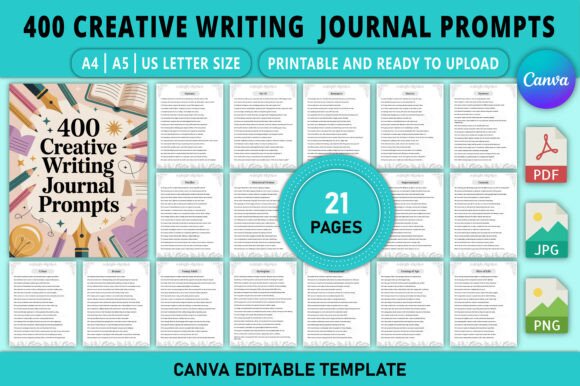
Creative prompts are a cornerstone of the writing life. But finding a collection that feels coherent, professionally structured, and adaptable to your specific brand or audience is surprisingly rare. The 400 Creative Writing Journal Prompts changes that. It is not simply a list of ideas—it is a complete, editable design system that puts the power of publishing back into your hands.
With 21 genres ranging from Fantasy to Slice of Life, and file formats ready for both digital platforms and print on demand, this resource is built for creators who refuse to settle for one-size-fits-all content. Whether you are a teacher building a classroom resource, a marketer crafting a lead magnet, or a self-publisher looking for your next KDP upload, this journal provides the foundation. The included Canva editable link means you can tailor every single page to match your visual identity exactly.
Visual Flexibility That Respects Your Brand
The first thing you notice about this journal is its thoughtful structure. The 21 beautifully designed pages are clean, uncluttered, and intentionally neutral—which makes them the perfect canvas for your own design choices. Because there is no bleed, you can drop these pages directly into your printing workflow without worrying about trimming or margin adjustments.
This blank canvas approach is ideal for designers and brand strategists. You are not forced into a predetermined aesthetic. Instead, you receive a robust architecture of prompts, and you supply the personality. This is where the conversation around typography and modern typography begins in earnest. The template gives you the space to decide whether your finished product feels warm and handwritten or sharp and commercial. Your brand identity drives the visual direction, not the other way around.
The included A4, A5, and US Letter print sizes provide further flexibility. Whether you are formatting for a cozy pocket journal or a spacious workbook, the layout holds up without looking stretched or cramped. This attention to practical formatting speaks directly to anyone who has fought with resizing templates for different platforms.
Matching Typography to Genre in Your Editable Journal
One of the most enjoyable parts of customizing this book is choosing your typefaces. Since the product contains 21 distinct genres, you have the opportunity to create subtle visual cues for your reader through smart font pairing. A collection of prompts that looks the same on every page can feel monotonous. By adjusting your creative font selections per section, you build a reading experience that mirrors the emotional shifts of the genres themselves.
Let’s look at a few realistic examples of how this plays out:
- Fantasy and Magical Realism: These sections call for a display font or a unique serif font that carries a sense of history and mystique. Avoid anything too rigid. A textured or slightly quirky serif font can set the tone before the reader even starts writing. Pair it with a clean sans serif font for the prompt body to keep the text approachable.
- Thriller and Crime: Lean into a clean, modern sans serif font. The sharpness and clarity of these typefaces reinforce the direct, high-stakes nature of the prompts. A bold weight for section headers adds authority and feels almost like a headline from a noir novel.
- Romance and Coming of Age: This is where a graceful script font or a carefully chosen handwritten font can add warmth and emotional resonance. Pair it with a light, airy sans serif for the prompt body to maintain readability. The contrast between the emotional header and the grounded body text mirrors the tension in these genres.
- Horror and Paranormal: Consider a distressed or jagged display font for the genre title. You want the visual to unsettle slightly. Keep the actual prompt text in a highly legible serif font to maintain that classic storytelling feel.
By adjusting the typography to match the mood, you are doing more than decorating pages—you are directing the reader's emotional response. This level of detail transforms a simple prompt list into a high-value design asset that feels curated rather than generated.
Who Actually Needs This Set of Prompts?
The audience for this product is broader than just individual writers. Let's break down who gets the most practical value from the 400 Creative Writing Journal Prompts and how they integrate it into real workflows.
Content Creators and Bloggers
Writer's block is a productivity killer. Having a bank of 400 prompts across 21 genres means you can always find a starting point for your next blog post, newsletter, or social media series. You can repurpose these prompts as conversation starters, audience engagement posts, or even video topics. The editable nature means you can brand each prompt with your website URL or logo before sharing it online.
Small Business Owners and Journal Publishers
If you are building a brand around creativity or self-improvement, customizing this journal with your logo, brand colors, and specific font selections creates a professional product in a fraction of the time it would take to build from scratch. The included print sizes make it straightforward to test different formats. You can launch a paperback on Amazon KDP and offer a digital version for download on your site without reformatting everything.
Graphic Designers and Agencies
This resource works as a fantastic client deliverable. A writing coach, a school, or a creative agency could all benefit from a branded journal. You, as the designer, can quickly customize the Canva link, apply the client's brand identity, and deliver a high-quality PDF or print-ready file. It expands your service offerings without requiring extensive copywriting on your end. It is a true commercial font and template asset that slots directly into your client workflow.
Publishers and Self-Publishers
For anyone focused on KDP, the no-bleed formatting and tested high-resolution PDF are significant time savers. You do not need to second-guess upload specifications. The 21 genres also allow you to create niche publications. You could extract the Horror prompts, style them with a dark, gritty aesthetic, and publish a standalone niche journal. The modular nature of this product supports rapid publishing cycles.
Practical Tips for Customizing Your Prompt Book
Getting the most out of this journal requires a little planning. Here is a straightforward workflow to ensure your final product feels cohesive and professional.
Start with Your Brand Identity
Before you open the Canva link, define your core visual elements. What colors represent your brand? What personality do you want to convey? A bold, energetic brand should explore strong display fonts and vibrant color palettes. A more established, authoritative brand might stick to classic serif fonts and muted tones. Consistency across all 21 pages reinforces professionalism and builds trust with your audience.
Test Your Font Pairings
Using too many typefaces can make the journal feel chaotic and disjointed. Limit yourself to two, or at most three, carefully chosen fonts.
- Header font: A distinctive display font or a strong serif font that captures attention and sets the genre tone.
- Body font: A highly readable sans serif font or a clean handwritten font that is easy to read in longer passages. This is where readability is most critical.
- Accent font: An optional script font for pull quotes, decorative elements, or the journal title itself.
Remember, every font you use needs to be licensed for your intended use. If you are selling this journal on Amazon KDP, ensure all fonts in your Canva design, including any premium font or commercial font you import, have the proper commercial licenses. Canva Pro's font library is a safe starting point, but if you upload custom creative fonts, verify the terms.
Layout and Readability Considerations
Your audience needs to be able to read the prompts comfortably. Avoid using overly elaborate handwritten fonts for the body text. Save those for titles or decorative flourishes. Maintain strong contrast between your text and background. The included no-bleed design gives you clear boundaries, so take advantage of the margin space to let your design breathe. A well-spaced prompt invites the user to write directly in the book without feeling crowded.
Beyond the Page — Digital and Social Applications
The value of this resource extends far beyond print. Because it is fully editable, you can repurpose it for digital content across multiple platforms.
Create individual prompt slides for your Instagram stories. Build a carousel for LinkedIn using a consistent sans serif font for a modern, clean look. Use the prompts as email subject lines or newsletter icebreakers. The web design and social media graphics you can generate from this template are limited only by your imagination. The high-resolution PNG files included make it easy to export specific prompts for immediate digital use without losing quality.
For marketers, this is a goldmine of design assets. A branded journal can become a lead magnet that builds your email list. You can offer the first genre as a free download, and the full collection as a paid product. The structured 21 genres allow you to target specific audience segments—horror fans, romance readers, science fiction enthusiasts—with highly relevant content. This targeted approach drives better engagement and conversion rates.
A Resource That Grows With Your Creative Projects
The 400 Creative Writing Journal Prompts is a flexible foundation for building audience engagement, publishing physical products, or sharpening your own creative discipline. The combination of extensive content, multi-genre flexibility, and full design control through Canva makes it a rare asset in the crowded space of writing resources.
Whether you are a designer looking for a new client offering, a publisher seeking a quick turnaround on a KDP upload, or a writer who simply wants a beautifully tailored space to develop stories, this journal gives you the raw material and the creative control. The quality of your output depends on the quality of your input—and with thoughtful customization, this input is exceptional. The time you invest in refining the font pairing, layout, and overall editorial design will directly reflect in how your audience perceives the value of the work inside.