Why a 24-Month Planner for 2026-2027 Might Change How You Approach Your Days
There is a particular kind of relief that comes when you realize you do not have to reinvent your planning system every twelve months. The gap between where you are and where you want to be is rarely bridged in a single year. Some goals need two cycles of seasons to fully take shape—a business idea that needs testing and scaling, a degree that spans multiple semesters, a health journey that requires consistent habits over twenty-four months. The Planner 2026-2027 is built for that reality.
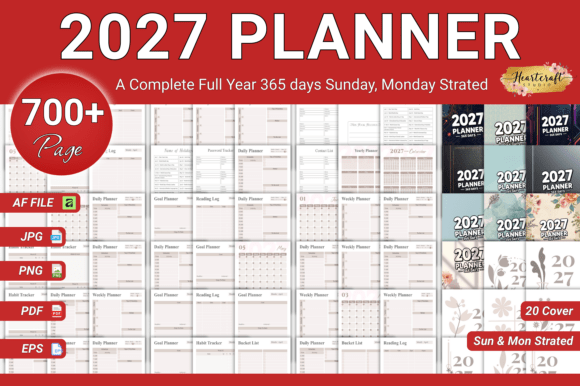
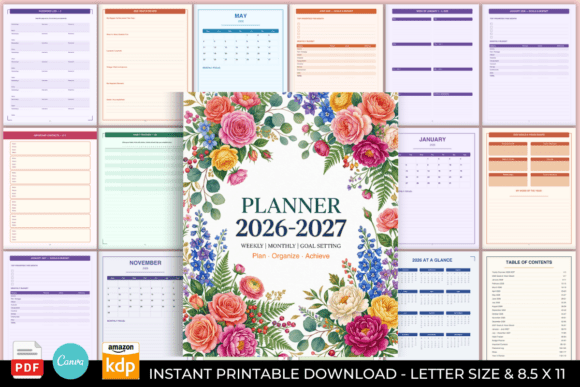
It is easy to think of a planner as just a collection of dates and lines. But the moment you open a 120-page book that covers January 2026 through December 2027, something shifts. You are no longer planning for the next few weeks. You are mapping two full years of your life. That changes how you think about priorities, how you allocate energy, and how you measure progress.
When One Year Is Not Enough
A single-year calendar works well for annual resolutions and quarterly reviews. But many meaningful endeavors do not fit neatly into twelve-month boxes. Consider someone launching a side business while holding a full-time job. The first year might involve research, validation, and small experiments. The second year is where those experiments turn into revenue, systems, and maybe a full-time pivot. A 24-month timeline gives that person permission to take the long view without losing sight of weekly execution.
Or think about a parent managing a household with children moving through school stages. Between sports schedules, parent-teacher conferences, summer camps, and holiday planning, having a two-year overview helps anticipate busy seasons before they surprise you. You can see that March 2027 is going to be packed with end-of-year milestones, so you adjust your work commitments in early 2026 to create breathing room.
The Planner 2026-2027 includes high-level calendars for both years, which is surprisingly useful for spotting patterns. Maybe you notice that every September you feel overwhelmed because you try to start too many projects at once. Seeing that across two years gives you the insight to change the pattern before it repeats.
For the career professional chasing a promotion
If you are aiming for a leadership role by early 2027, you need more than a to-do list. You need a system that connects daily tasks to quarterly objectives to annual growth. The weekly action layouts in this planner let you break down a big goal like "develop management skills" into smaller steps: take a course in March 2026, lead a project in summer 2026, mentor a junior colleague in fall 2026, and document results through 2027. Monthly reflections give you a reason to pause and ask whether you are actually moving toward that promotion or just staying busy.
For the entrepreneur building a business
Starting a business is rarely a straight line. There are months of groundwork followed by sudden bursts of activity. A two-year planner helps you map product launches, funding rounds, seasonal revenue fluctuations, and hiring timelines. You can see that your slow season in early 2026 is the perfect time to build your website, while the busy season in late 2027 is when you need to have systems in place. The financial tracking section becomes a quiet record of how your business grows month by month. It is one thing to feel like your business is growing. It is another to see it on paper across 24 months.
For the student or lifelong learner
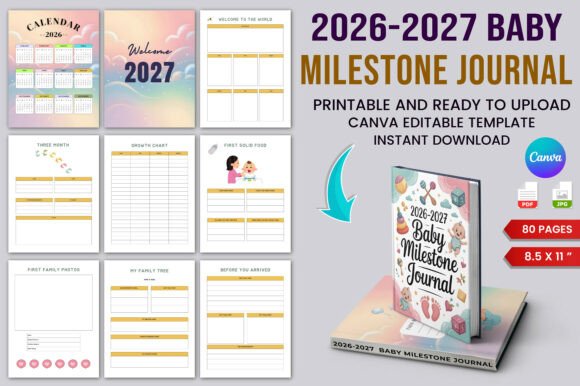
Returning to school while working? A 24-month view helps you plan course loads around work projects, internships, and personal commitments. You can see exactly which semesters will be heavy and which will be lighter, and plan your social life, travel, or side projects accordingly. The vision board spreads for each year are especially useful here. They force you to articulate not just what degree you want, but what kind of life you want after that degree. That clarity makes the hard semesters feel purposeful.
For the household manager or caregiver
Running a household on top of everything else is a complex coordination effort. The Planner 2026-2027 gives you space to track medical appointments, school holidays, family events, meal planning, and household projects across two years. The monthly reflection pages become a place to note what worked and what did not—maybe that meal prep system only lasted two months, or that chore chart needs a redesign. Seeing those reflections across months helps you build systems that actually stick.
Why the Vision Sections Matter More Than You Think
Most planners treat goal setting as a formality. You write down a few resolutions in January and never look at them again. This planner dedicates spreads to vision boards for both 2026 and 2027, which changes the relationship between daily tasks and long-term direction. When you spend ten minutes at the start of each month revisiting your vision, your weekly actions start to align with what actually matters. The gap between daily busyness and meaningful progress narrows.
For someone who tends to drift from one idea to another, a two-year vision board acts as an anchor. You can write down that you want to run a marathon by fall 2027, or launch a creative project by spring 2026, or save a specific amount for a home renovation. Then every weekly layout becomes a place to check in with that vision. Did this week move you closer or further away? It is a gentle accountability system that does not feel like surveillance.
What to Consider Before Committing to a 24-Month System
Twenty-four months is a long time to stay with one planning format. Some people thrive on consistency. Others get bored and want a fresh design every year. If you are someone who likes changing colors, formats, or layouts frequently, a two-year planner might feel restrictive by month eighteen. The US Letter size is spacious, but it also means you are carrying a larger book around. Think about whether you prefer a portable planner or a desk-based system that stays in one place.
Another consideration is how much structure you actually need. This planner has dedicated sections for vision, monthly execution, weekly tasks, and financial tracking. That is a lot of prompts. Some people love being guided through every step. Others prefer a blank page and total freedom. If you have never used a structured planner before, it might take a month or two to settle into the system. That is normal. Give yourself permission to skip sections until they feel useful.
The weekly action layouts are optimized for breaking down monthly goals into daily tasks. That works well if you are a list-maker who likes checking off small wins. But if you are someone who thinks in terms of blocks of time or energy levels rather than tasks, you might need to adapt the layout to fit your style. Write times next to tasks if that helps. Use the margins for notes. The structure is a starting point, not a cage.
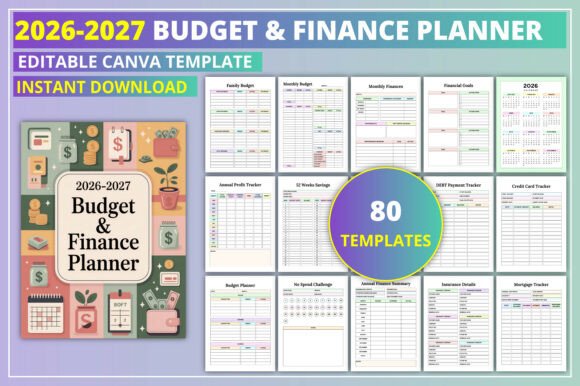
Financial tracking is included, which is a strength for people who want to connect spending habits with life goals. But if you already use a dedicated budgeting app, you might not use this section heavily. That is fine. Use those pages for something else—reflections, notes, or sketches.
Where the Planner Shines and Where It Stays Quiet
The biggest strength of the Planner 2026-2027 is the bridge it builds between big dreams and small steps. You can dream about your life in 2027 on the vision pages, then flip to a weekly spread and figure out what to do this Tuesday to make that dream real. That connection is rare in planning tools. Most either focus on lofty goal setting or on daily scheduling. This one does both without making you feel like you are switching between two different systems.
The monthly reflection pages are another quiet strength. They give you permission to notice what worked and what did not without judgment. Over time, those reflections become a personal archive of your own growth patterns. You start to see that you are most productive in certain months, that you struggle after holidays, that you need more rest in winter. That self-knowledge is more valuable than any productivity hack.
What this planner does not do is force you to be productive every single day. It does not gamify your progress or reward you for checking boxes. If you need external motivation or a dopamine-driven system, you might want to supplement this planner with a habit tracker or a reward system of your own. The planner provides structure, but the discipline comes from you.
It also does not include digital integration. If you live entirely in digital calendars and synced reminders, you might miss having a companion app. Some people use the planner as a physical anchor while keeping a digital calendar for appointments and deadlines. That hybrid approach works well: the planner holds the vision and the weekly breakdown, while the phone handles reminders and location-based tasks.
Real Moments Where the Planner Becomes Invaluable
Imagine sitting down in December 2026 to review the year. You flip through twelve months of reflections, financial notes, and completed weekly spreads. You see exactly where you spent your time and energy. That is not just a log. It is evidence of how you lived. You can celebrate the wins, learn from the struggles, and carry that wisdom into 2027. That kind of annual review is impossible if you only have a few months of data or a half-filled notebook.
Or picture planning a big life transition—a move, a career change, a new family addition—across two years. You can map the preparation stages, the key decisions, and the emotional seasons that come with change. Having a visual timeline reduces the anxiety of the unknown. You can see that yes, this month will be hard, but the next month includes built-in rest. That perspective is hard to hold in your head alone.
The Planner 2026-2027 is not about being perfect or productive every day. It is about showing up for your own life with a little more intention than you might otherwise have. Between January 2026 and December 2027, a lot will happen. Some of it you can plan. Some of it will surprise you. Having a system that holds both the structure and the flexibility makes those two years feel less like a blur and more like a story you are actively writing.