Weight Loss Journals
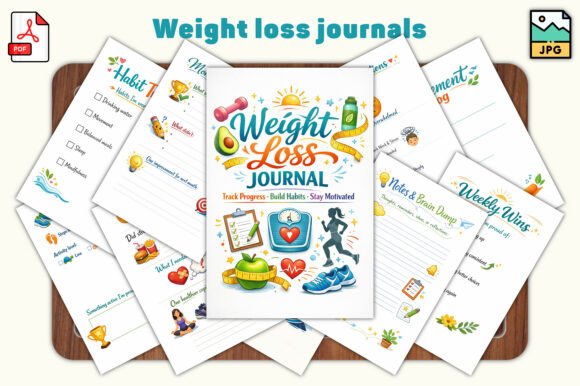
A weight loss journey is rarely about willpower alone. It is about awareness, consistency, and the quiet accumulation of small decisions made day after day. Weight Loss Journals is a 30-page printable tool designed to support exactly that kind of intentional process. It is not a quick fix or a rigid protocol. It is a structured yet flexible companion for anyone who wants to track progress, build healthier habits, and stay motivated over time. Whether you are an entrepreneur managing a demanding schedule, a coach guiding clients, or a professional navigating the chaos of daily life, this journal offers a practical framework for turning vague intentions into measurable outcomes.
Why a Journal Matters for Weight Loss Strategy
Most people approach weight loss with a goal in mind but without a system to support it. They rely on memory, motivation, or external accountability. The problem is that memory is unreliable, motivation fluctuates, and external accountability rarely lasts. A journal like Weight Loss Journals fills that gap by providing a consistent place to record, reflect, and adjust. It turns an abstract goal into a daily practice.
From a strategic perspective, writing things down forces clarity. When you log what you eat, how you move, and how you feel, patterns emerge that would otherwise remain invisible. You begin to see not just what you are doing, but why you are doing it. That awareness is the foundation for lasting change. Without it, you are essentially navigating without a map.
Using the Journal to Support Long-Term Goals
Goals are only useful when they are broken down into actionable steps. Weight Loss Journals includes goal-setting motivation pages that help you define what you actually want and why. This is not about writing down a number on a scale. It is about understanding the deeper reasons behind your efforts. Do you want more energy for your business? Better focus during work hours? Greater confidence in client meetings? When you connect your daily habits to something meaningful, consistency becomes easier.
The daily food and water trackers, movement logs, and mood check-ins are not just data collection tools. They are decision-making aids. Each time you fill in a page, you are asking yourself: What did I choose today? How did it affect me? What might I try differently tomorrow? Over weeks, these micro-reflections compound into genuine behavioral change.
Aligning the Journal with Your Planning Process
Many professionals already use planning tools for their work. Applying the same mindset to health is a natural extension. Consider treating your Weight Loss Journals as a weekly planning session. At the start of each week, review your previous entries, identify one or two adjustments, and set a clear intention for the days ahead. This transforms the journal from a passive record into an active planning instrument.
For example, if you notice that your food choices deteriorate on days with back-to-back meetings, you can plan ahead. Prepare a simple meal or snack that fits your goals and keep it accessible. The journal helps you detect that pattern before it becomes a crisis.
Building Healthy Habits Without Overwhelm
One of the most common reasons people abandon weight loss efforts is that they try to change too much at once. Weight Loss Journals is designed to avoid that trap. Its structure encourages gradual habit building. You can start with just the daily tracker and add the reflection pages once that feels natural. You do not need to fill every section perfectly. The journal works with you, not against you.
The habit trackers and affirmations sections are particularly useful here. Rather than aiming for perfection, you aim for consistency. A streak of small wins is far more valuable than a single perfect day followed by burnout. The non-scale victories and self-care pages reinforce this perspective by reminding you that progress takes many forms. Better sleep, improved mood, more stable energy, and greater self-awareness are all legitimate outcomes.
Practical Examples of Strategic Use
- For entrepreneurs and freelancers: Use the weekly progress reviews to evaluate how your nutrition and movement affect your productivity and creative output. Over time, you will learn which habits support your best work.
- For coaches and trainers: Use Weight Loss Journals as a client resource. It provides a structured yet simple way for clients to track their own progress between sessions, saving you time and giving you better data to work with.
- For busy professionals: Keep the printable PDF on your phone or tablet. Fill in the food and water tracker during a lunch break. Use the mood check-in before a stressful meeting. The journal adapts to your schedule, not the other way around.
- For content creators and bloggers: Document your own journey using the journal as a reference. Share insights from your weekly reviews with your audience. Authentic, process-based content resonates more than before-and-after posts.
When to Use the Journal and How to Approach It
Weight Loss Journals is most effective when used as a continuous practice rather than a one-time effort. The 30 pages are designed to cover a month of daily tracking plus weekly reviews. That is enough time to identify patterns, test adjustments, and see early results. After the first month, you can print another copy or continue with a new set of goals.
Approach it with curiosity, not judgment. The goal is not to achieve a perfect score every day. It is to learn what works for you in your current circumstances. Some weeks will be messy. That is normal. What matters is that you keep showing up and recording your experience. Over time, the data becomes your greatest ally.
What to Consider Before Relying on It
No tool works on its own. Weight Loss Journals is a support system, not a substitute for medical advice, professional coaching, or personalized nutrition guidance. If you have specific health conditions, dietary restrictions, or complex goals, consult a qualified professional before making significant changes.
Also consider your own relationship with tracking. For some people, logging food and mood daily feels empowering. For others, it can become obsessive or stressful. If you notice that the journal is causing anxiety rather than clarity, take a step back. Use only the sections that feel supportive. Skip the rest. The journal should serve you, not the other way around.
The Risks of Using a Journal Without Clear Goals
This is worth stating directly: using Weight Loss Journals without a clear intention can lead to aimless tracking. You end up with pages of data but no insight. That is a missed opportunity. To avoid this, start by answering a few simple questions: What am I hoping to learn? What specific habit do I want to build? What does success look like for me beyond the scale?
Without these anchors, the journal becomes busywork. With them, it becomes a strategic asset. The difference is not in the tool itself. It is in how you use it.
How to Use the Journal Intentionally Rather Than Randomly
- Set a clear focus for each week. Do not try to track everything at once. Pick one or two areas to emphasize, such as water intake or emotional eating triggers.
- Schedule a five-minute review at the end of each day. Look at what you logged and note one thing that went well and one thing you might adjust.
- Use the weekly progress reviews as decision points. Ask yourself: What is working? What is not? What is one change I want to test next week?
- Pair the journal with a simple morning or evening routine. Consistency is easier when tracking is attached to an existing habit, like having coffee or brushing your teeth.
- Share your approach with a trusted friend, coach, or community. External reflection deepens your own understanding and adds a layer of gentle accountability.
Long-Term Value Beyond the First Month
The true value of Weight Loss Journals reveals itself over time. After several weeks of use, you will have a record of your behavior patterns, emotional triggers, and what actually moves the needle for you. That knowledge is portable. You can apply it to other areas of your life, including work habits, productivity routines, and stress management.
For business owners and creators, this kind of self-awareness is directly relevant to performance. When you understand how your physical state affects your decision-making, communication, and creativity, you can structure your days more strategically. The journal becomes not just a weight loss tool but a broader personal operating system.
Integrating the Journal into a Larger Wellness System
For maximum impact, treat Weight Loss Journals as one component of a larger approach. Combine it with a simple movement routine, adequate sleep, and a balanced eating pattern that fits your lifestyle. Use the reflection pages to track how these elements interact. Over time, you will develop a personalized system that is far more effective than any generic plan.
Coaches and trainers can use the journal as a client onboarding tool. Give it to new clients during the first week and review their entries together. This provides immediate insight into their current habits, challenges, and mindset. It also sets the expectation that they are active participants in their own progress.
Final Strategic Observations
The most effective weight loss journeys are not about dramatic transformations. They are about small, consistent adjustments that compound over time. Weight Loss Journals supports that process by giving you a simple, structured place to track, reflect, and adjust. It removes the guesswork and replaces it with awareness.
If you are serious about building healthier habits, improving your relationship with food and movement, and staying motivated without relying on external pressure, this journal is a practical starting point. Use it with intention, review your data with curiosity, and let it guide you toward the decisions that actually work for your life.
The pages are blank. What you write in them is entirely up to you.