Transforming Business Workflows with the ChatGPT Business Prompts Guide
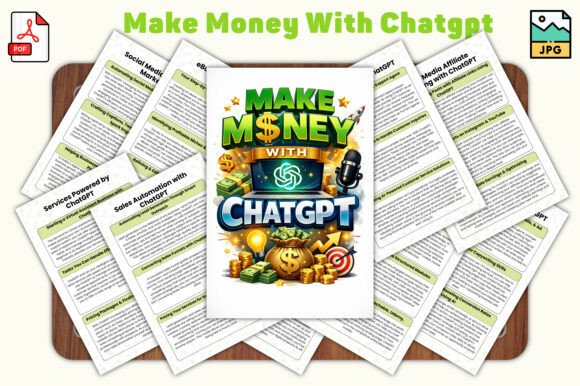
The rapid evolution of artificial intelligence has placed powerful language models at the fingertips of professionals worldwide. Yet the gap between having access to a tool like ChatGPT and using it effectively for tangible business outcomes remains significant. This is where structured resources like the ChatGPT Business Prompts Guide step in, offering a bridge between raw AI capability and practical, daily application. Designed as a 30-page workbook tailored for entrepreneurs, freelancers, and small business owners, this guide reframes ChatGPT from a novelty into a reliable virtual business assistant. Instead of guessing prompts or chasing vague advice, users follow a deliberate roadmap that covers idea generation, marketing, strategy, and scaling.
What the Workbook Offers Beyond Basic Prompting
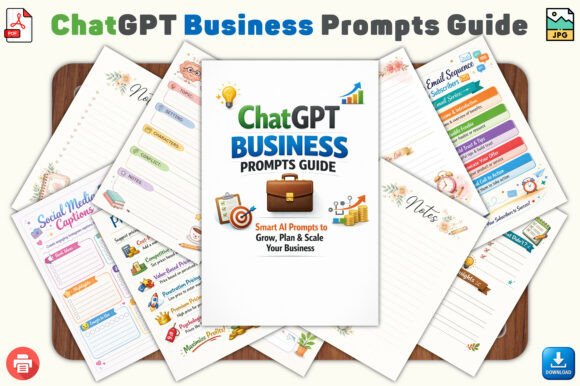
At its core, the ChatGPT Business Prompts Guide is not merely a list of questions to copy and paste. It is a structured system that encourages active engagement with AI through writing, reflection, and customization. Each of the 30 pages contains a carefully crafted prompt category, but crucially, every page includes dedicated space for notes and personalization. This design transforms passive reading into an iterative process where users refine their prompts based on their unique business context. The minimalist, Canva-style layout with clean white backgrounds and subtle icons makes the workbook approachable even for those who feel intimidated by technology. Whether you are a seasoned marketer or a solopreneur taking your first steps into AI, the format prioritizes clarity over complexity.
Prompt Categories That Cover the Business Lifecycle
The guide organizes prompts into ten distinct categories, each addressing a critical phase of business development. The categories include business idea generation, target audience and customer research, branding and naming prompts, marketing content creation, email and sales copy, strategy and pricing, productivity and workflow planning, and scaling prompts. This structure ensures that a single workbook can support a venture from conception through growth. For instance, a startup founder might begin with idea validation prompts, then move to audience research, and later return to the guide for scaling strategies. The modular nature means that users are not required to proceed linearly; they can jump to the section most relevant to their immediate challenge.
Applying Prompts to Real-World Business Tasks
The practical value of the ChatGPT Business Prompts Guide becomes evident when considering how each prompt translates into actionable outcomes. In the marketing category, a user might find a prompt like "Generate five email subject lines for a product launch targeting eco-conscious consumers." Instead of spending hours brainstorming, the entrepreneur inputs this into ChatGPT and receives a starting point that can be refined. The workbook then provides space to note which subject lines resonated and how to adjust the prompt for better results. Similarly, in the productivity section, prompts for daily prioritization or meeting agenda creation help small teams streamline operations without expensive software. These examples highlight the guide's emphasis on reducing friction in routine business tasks.
From Idea to Execution: A Worked Example
Consider a freelance graphic designer looking to expand services. Using the business idea generation prompts, they ask ChatGPT to identify niche markets where design skills are underutilized. The AI suggests areas like infographics for nonprofit reports or visual branding for local restaurants. The workbook page allows the designer to jot down which ideas align with their portfolio and location. Next, the target audience section prompts them to drill into one niche: "Describe the pain points of restaurant owners regarding branding." By refining the output, the designer crafts a targeted service package. The ChatGPT Business Prompts Guide thus acts as a facilitator for strategic thinking, turning vague ambitions into concrete plans.
Advantages for Entrepreneurs and Small Teams
One of the standout characteristics of this workbook is its accessibility for users with varying levels of AI experience. Beginners appreciate the ready-to-use prompts that eliminate the trial-and-error phase of learning how to talk to AI. Advanced users benefit from the customization space, which encourages experimentation with prompt variables like tone, audience, or format. The guide also promotes consistency in AI usage. Instead of sporadically turning to ChatGPT for random questions, business owners develop a disciplined habit of prompting for specific outcomes. This shift from reactive to proactive AI interaction can significantly improve productivity over time.
Cost-Effectiveness and Resource Efficiency
For startups and freelancers operating on lean budgets, the workbook offers a high return on investment. Rather than subscribing to multiple marketing tools or hiring copywriters for every campaign, a business can leverage ChatGPT guided by these prompts to produce drafts, conduct research, and generate options. The guide effectively democratizes access to business strategy tools that were once reserved for agencies with large budgets. Furthermore, the print-ready PDF format means that users can keep a physical copy on their desk, reducing screen fatigue and allowing for handwritten annotations that deepen engagement with the material.
Building Confidence Through Structured Practice
Many business owners feel uncertain about how to phrase prompts to get useful responses. The ChatGPT Business Prompts Guide addresses this by providing language that has been tested for real-world needs. As users work through the pages, they internalize patterns for effective prompting. Over time, they develop the intuition to craft their own prompts without the workbook. This scaffolding effect is crucial for long-term adoption of AI in business. The guide does not make users dependent on it; rather, it teaches them how to fish for themselves.
Considerations for Maximum Impact
While the workbook is a powerful tool, its effectiveness depends on how it is used. The prompts are starting points, not final outputs. Users who expect to copy a prompt and receive a finished marketing campaign will be disappointed. The real value comes from iterating on the AI's responses, combining them with human judgment and domain knowledge. Additionally, the guide covers a broad range of categories, but depth in any single area may require supplementing with specialized resources. For example, the strategy and pricing section provides foundational prompts, but a SaaS company with complex tiered pricing might need to adapt extensively.
Integrating the Workbook into Existing Workflows
To get the most out of the ChatGPT Business Prompts Guide, it helps to treat it as a companion during planning sessions rather than a one-time read. Entrepreneurs might dedicate 20 minutes each morning to work through one page, testing the prompt and noting results. Teams can use it as a collaborative tool during meetings, projecting the prompts and discussing how AI suggestions align with their goals. The clean JPG and PDF formats make it easy to print multiple copies for workshops or retreats. Over time, the annotated workbook becomes a personalized reference of what works for that specific business.
Real-World Use Cases Across Different Business Types
The versatility of the guide is evident when considering how it serves different audiences. A solopreneur building an online course can use the marketing content prompts to draft social media posts and email sequences. A small retail business owner might turn to the branding section to refine their store's voice and visual identity. A consultant could employ the strategy prompts to structure a client proposal or outline a growth plan. Even educators and researchers exploring AI for business education can use the workbook as a teaching aid, demonstrating how structured prompting leads to more reliable AI outputs.
Evolving with the AI Landscape
One concern with any printed guide about AI is obsolescence. However, the ChatGPT Business Prompts Guide focuses on prompt categories that are relatively stable, such as audience research and content structuring, rather than on specific ChatGPT features that may change. The underlying principles of clear context, specific instructions, and iterative refinement remain relevant regardless of model updates. Users can apply the same prompting techniques to other AI chatbots or future versions of ChatGPT, making the workbook a durable resource.
The Role of Minimalist Design in Learning
The workbook's white background and clean layout are not merely aesthetic choices. They serve a functional purpose by reducing cognitive load. In a business context where attention is fragmented, a clutter-free page helps users focus on the task at hand. The icons act as visual cues that differentiate categories without overwhelming the reader. This design philosophy aligns with the guide's goal of making AI-assisted business planning straightforward and enjoyable. Every element, from the 6×9 inch size to the high-resolution JPG files, is optimized for practical use rather than decoration.
Encouraging Regular Reflection and Adaptation
The included writing space on each page is perhaps the most understated yet powerful feature. Business conditions change rapidly; a prompt that worked for a product launch might not suit a rebranding effort. By documenting what worked and what didn't, users create a feedback loop that improves both their prompting skills and their business acumen. Over the course of 30 pages, this practice builds a habit of intentional AI interaction that extends beyond the workbook into everyday business operations.
Considerations for Advanced Users
Those already experienced with prompt engineering might initially view a structured guide as too elementary. However, the ChatGPT Business Prompts Guide offers value even for advanced users by providing a framework for consistency. When managing multiple projects, it is easy to default to generic prompts that produce generic answers. The workbook's categories and note spaces encourage a more deliberate approach. Advanced users can use the prompts as templates and then modify them with advanced techniques like system prompts or multi-turn reasoning, documenting their customizations in the margins. This flexibility ensures the guide scales with user expertise.
Privacy and Data Considerations
Any business using public AI tools must consider data confidentiality. The workbook implicitly addresses this by encouraging users to write down their ideas and prompts before inputting them into ChatGPT. This allows business owners to decide what information is safe to share and what should remain in their private notes. For sensitive business strategies, users can use the prompt structure but anonymize details when interacting with AI. The physical workbook format thus serves as a privacy buffer between proprietary business thinking and cloud-based AI processing.
Why Structure Matters in AI Adoption
The broader lesson from the ChatGPT Business Prompts Guide is that AI tools, no matter how powerful, require human-led structure to produce consistent business value. Without a mental model or a workflow framework, users often ask vague questions and receive equally vague answers. The guide provides that missing structure, transforming ChatGPT from a random idea generator into a focused assistant. In an era where businesses are pressured to adopt AI quickly, resources that emphasize thoughtful implementation over hype are invaluable.
Ultimately, the ChatGPT Business Prompts Guide stands out because it treats AI as a collaborator rather than a magic bullet. It acknowledges that the best outputs come from combining machine speed with human context. By offering a path from curiosity to competence, it empowers business owners to reclaim time spent on repetitive tasks and reinvest it in strategic thinking. Whether used for daily operations, quarterly planning, or scaling initiatives, the workbook equips users with a repeatable method for extracting maximum value from conversational AI.