Self-Love Workbook for Black Women: A Journey of Radical Self-Worth and Healing
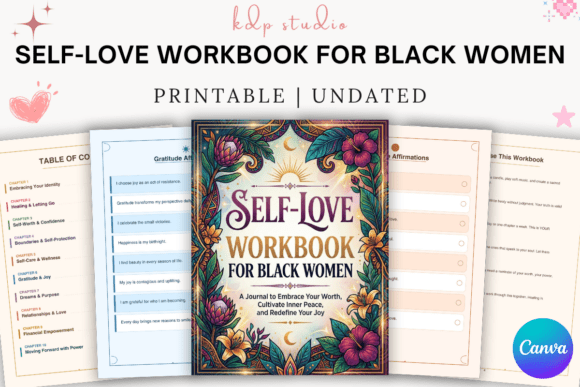
For many Black women, the concept of self-love can feel like a distant luxury rather than a daily practice. Between career demands, family responsibilities, community expectations, and the weight of navigating spaces that often weren't built with you in mind, pouring back into yourself can easily fall to the bottom of the list. The Self-love Workbook for Black Women was created to change that—not as another task to add to your plate, but as a gentle, guided return to yourself. This 112-page workbook walks you through ten chapters of journaling prompts, affirmations, and exercises designed specifically for the unique experiences and joys of Black womanhood.
What Makes This Workbook Different
You've likely seen self-help journals before, maybe even bought a few. What sets this workbook apart is that it doesn't ask you to separate your identity from your healing. The prompts and exercises are rooted in the realities that Black women navigate daily—from code-switching at work to carrying the emotional labor of family and friends. Instead of generic advice about "positive thinking," this workbook meets you where you are, acknowledging that self-love for Black women is often an act of resistance and reclamation.
The chapters are organized to take you from foundational work around identity and worth, through healing and boundary-setting, and into a practice of softness and joy. It's not a race to the finish; it's a space to sit with yourself honestly and compassionately.
Real-World Scenarios Where This Workbook Shines
Imagine you've just come home after a long day. Maybe you spent hours in meetings where your ideas were overlooked, only to be praised when a colleague repeated them. Perhaps you mediated a family disagreement over the phone during your lunch break, or you spent the evening reassuring a friend who was struggling. This workbook becomes the space where you can finally exhale. The prompts ask questions like, "What did I give away today that I wish I had kept for myself?" and "Where did my voice feel small, and how can I reclaim it tomorrow?"
For the Black woman who is transitioning careers, ending a relationship, or moving to a new city, the early chapters on identity and worth are particularly grounding. When everything around you feels uncertain, having a structured yet flexible tool to reconnect with your core self can be a lifeline. The exercises around radical self-worth help you separate your value from your productivity or accomplishments—something that's especially challenging in a culture that often equates worth with output.
Who Benefits Most from This Workbook
While any Black woman can find value in this resource, certain life stages and situations make it especially relevant.
- The high-achieving professional who has built a successful career but feels disconnected from herself outside of work. The chapters on setting boundaries and the power of your voice help untangle the habit of overextending for approval.
- The new mother navigating the shift in identity that comes with parenthood. The gentle prompts around letting go and healing past hurts offer a private space to process the emotional weight that often goes unspoken.
- The woman in recovery from a toxic relationship or friendship who needs to rebuild trust in her own judgment. The workbook doesn't rush this process but provides a steady, compassionate structure for doing the work.
- The creative or entrepreneur who pours so much of herself into her work that she forgets to replenish. The grace of softness chapter becomes a permission slip to rest without guilt.
How Different Users Engage with the Workbook
Some women treat the workbook as a morning ritual, spending fifteen minutes with a chapter before starting their day. Others find it more useful as an evening wind-down, especially after emotionally heavy days. A few readers have mentioned using specific chapters on repeat—returning to the boundary-setting exercises whenever they feel their peace being compromised.
For those who prefer a slower, more reflective pace, the workbook works beautifully as a weekly practice. You might sit with a single prompt for several days, letting the answer evolve as you journal. The lack of rigid deadlines within the structure means you can adapt it to your season of life without feeling behind.
Small groups have also used the workbook as a gentle book club format. Meeting once a month to discuss a chapter creates accountability and shared insight, though the content is deeply personal enough that you never have to share more than you're comfortable with.
Practical Considerations Before You Start
This workbook is 112 pages, which means it's substantial without being overwhelming. The chapters are designed to build on each other, so starting at the beginning rather than jumping around tends to yield the most benefit. That said, if a particular chapter resonates with something you're actively navigating, there's no harm in letting that pull you in first.
Some of the exercises ask you to sit with uncomfortable feelings—past hurts, internalized messages about your worth, patterns of people-pleasing. That's part of the healing, but it's worth knowing going in that certain prompts might bring up emotions you didn't expect. Having a trusted friend, therapist, or support system available is never a bad idea, though the workbook itself provides grounding affirmations to help you regulate as you go.
The journaling prompts leave room for both short answers and longer reflections, so you can adapt based on how much time and energy you have. On days when you're tapped out, a single sentence in response to a prompt is still progress. On days when you have more capacity, you might fill several pages.
Strengths of This Workbook
The specificity of the content is its greatest strength. These aren't generic affirmations that could apply to anyone—they're written with the lived experiences of Black women in mind. The language around "unapologetic joy" and "the grace of softness" speaks directly to the pressure many Black women feel to be strong, resilient, and always available for others.
The structure is also well-considered. Moving from identity and worth into healing and boundaries, and then into softness and joy, creates a natural progression that doesn't rush you into vulnerability before you've built a foundation. The exercises feel like conversations with a wise, compassionate friend rather than clinical worksheets.
Potential Limitations to Keep in Mind
No single resource can address every aspect of self-love, and this workbook doesn't pretend to be therapy. For women dealing with deep trauma, clinical depression, or anxiety disorders, this workbook can be a wonderful complement to professional support but shouldn't replace it. Consider it a companion to your healing journey rather than a standalone solution.
The workbook also assumes a certain level of readiness to engage with emotional work. If you're in a season where you're barely keeping your head above water, some of the prompts might feel like too much. In that case, you might benefit from simply reading the affirmations without pushing yourself to journal until you feel more resourced.
For women who prefer digital tools, the physical format means you'll need a pen and a quiet space. Some readers have mentioned photocopying favorite pages so they can revisit prompts without feeling like they're "using up" the workbook. That's a practical workaround if you're someone who likes to return to specific exercises regularly.
Bringing the Workbook Into Your Daily Life
The real magic of this workbook isn't in filling out the pages—it's in how the reflections start showing up in your daily decisions. After working through the boundary-setting chapter, you might find it a little easier to say no to an obligation that drains you. After sitting with the prompts on radical self-worth, you might notice yourself less willing to shrink in spaces where your voice deserves to be heard.
Some readers have reported that the workbook changed how they talk to themselves internally. The affirmations, repeated over time, begin to replace old critical narratives with something kinder. That shift doesn't happen overnight, but the workbook gives you a consistent practice for letting those new beliefs take root.
For the Black woman who has spent years giving her energy to everyone else, this workbook is an invitation to turn some of that care inward. It's not selfish—it's necessary. And it's a journey worth starting exactly where you are.
Whether you're looking to heal old wounds, set stronger boundaries, or simply reconnect with the joy that's already within you, the Self-love Workbook for Black Women offers a thoughtful, culturally grounded path forward. One prompt, one reflection, one deep breath at a time.