25 Page Ultimate Budget Finance Planner: A Strategic Guide to Intentional Money Management
Managing personal or business finances effectively requires more than willpower—it demands structure, clarity, and a system that aligns with how you actually think about money. The 25 Page Ultimate Budget Finance Planner offers exactly that: a thoughtfully designed set of tools that move beyond simple tracking into genuine financial strategy. For entrepreneurs, freelancers, small business owners, and professionals alike, this planner provides a framework for not just recording numbers, but understanding them, questioning them, and using them to make better decisions.
This article explores what makes this planner strategically useful, when and how to use it, and what to consider before integrating it into your routine. Whether you are a creator managing irregular income, a marketer overseeing project budgets, or a publisher planning annual cash flow, the principles here apply directly to your financial reality.
What the 25 Page Ultimate Budget Finance Planner Actually Offers
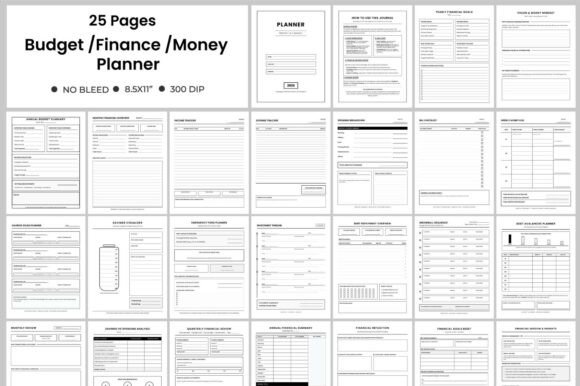
At its core, this is a printable, high-resolution financial planning toolkit consisting of 25 carefully structured pages. Available as a PDF with accompanying PNG files at 300 dpi, it is designed for KDP publishing and personal use alike. The size is standard letter (8.5″ x 11″) with no bleed, making it straightforward to print at home or through a professional service. Each page serves a distinct purpose, from goal setting to debt repayment, and the entire set is customizable to fit your specific needs.
What distinguishes this planner from generic budgeting templates is the progression it encourages. The pages are not isolated worksheets; they form a logical journey from vision and mindset through annual summaries, monthly tracking, weekly logs, savings strategies, debt management, and reflective review. This sequence mirrors how thoughtful financial planning actually works: you start with intention, move into action, and periodically step back to evaluate.
The included pages cover:
- Finance Planner Cover and How to Use This Planner
- Yearly Financial Goals and Vision Money Mindset
- Annual Budget Summary and Monthly Financial Overview
- Income and Expense Trackers with Spending Categories Breakdown
- Bill Payment Checklist and Weekly Money Log
- Savings Goals Planner, Visual Savings Jar Tracker, and Emergency Fund Planner
- Investment Timeline Tracker and Debt Repayment Overview
- Progressive Debt Snowball Planner and Debt Avalanche Planner
- Review Page, Savings vs Spending Analysis, and Quarterly Financial Review
- Annual Financial Summary, Financial Reflection Journal, and Goals Reset Page
- Financial Wisdom Tips
This is not a passive document. It is a working system that requires active engagement, and that is precisely where its value lies.
Why Thoughtful Use of This Planner Supports Better Financial Decisions
A budget planner is only as effective as the thinking behind it. Used thoughtfully, the 25 Page Ultimate Budget Finance Planner becomes a decision-making tool rather than a mere record-keeping exercise. Each page prompts you to ask specific questions about your money: Where is it coming from? Where is it going? What patterns are emerging? Are your spending habits aligned with your stated goals?
For entrepreneurs and small business owners, this kind of structured reflection is critical. Revenue can fluctuate, expenses vary by season, and long-term investments often compete with short-term operational needs. Having a planner that separates income tracking from expense tracking, and then forces a comparison through the Savings vs Spending Analysis page, helps you see the full picture before making strategic choices.
Freelancers and creators face similar challenges. Irregular income makes it tempting to avoid detailed tracking altogether, but that avoidance often leads to financial stress. The Monthly Income Tracker and Weekly Money Log pages provide the granularity needed to understand cash flow patterns over time. When you can see exactly which months generate surplus and which create shortfalls, you can plan accordingly—whether that means building a larger emergency fund or adjusting your pricing structure.
The planner also supports long-term thinking through the Investment Timeline Tracker and Savings Goals Planner. These pages encourage you to articulate what you are saving for and when, rather than treating savings as a vague aspiration. This specificity makes it easier to prioritize spending decisions because you have a clear benchmark for what matters most.
Strategic Applications Across Different Roles
Different professionals will find different value in this planner. Consider how it applies to a few specific use cases.
For Marketers and Creators Managing Project Budgets
If you oversee campaign budgets or content production costs, the Spending Categories Breakdown page becomes a practical tool. Instead of lumping all expenses into broad categories, you can break down spending by channel, platform, or project type. Over time, this data reveals which areas deliver the best return and which may need adjustment. The Quarterly Financial Review provides a natural checkpoint to compare actual spending against initial projections and refine future plans accordingly.
For Small Business Owners and Solopreneurs
Running a business means balancing personal and professional finances, often with significant overlap. The planner does not force a separation, but it does require you to track both income and expenses systematically. The Debt Repayment Overview and Progressive Debt Snowball Planner are particularly valuable if you are carrying business debt. These pages help you choose a repayment strategy—whether snowball (smallest debts first) or avalanche (highest interest first)—and track progress over time.
The Emergency Fund Planner is another essential page for business owners. Income interruptions are a reality, and having a dedicated plan for building a cash reserve can prevent crisis-driven decisions that harm long-term growth.
For Educators and Coaches Teaching Financial Literacy
This planner can also serve as a teaching tool. If you work with clients or students on financial skills, the Vision Money Mindset and Financial Reflection Journal pages provide a structured way to explore attitudes toward money. The Annual Financial Summary and Goals Reset Page allow for periodic reassessment, which is a core habit of financially literate individuals.
For Publishers and Content Creators Using KDP
The planner is explicitly designed for KDP publishing, with tested formatting and no bleed. This makes it ready to upload as a low-content or medium-content book. For publishers looking to expand their product line, this interior offers a complete solution that requires minimal customization. The 25-page structure is concise enough to keep production costs low while providing enough depth to offer genuine value to buyers.
When and How to Use This Planner for Maximum Impact
Timing matters when adopting a new financial system. The best approach is to start at a natural transition point: the beginning of a month, quarter, or calendar year. The planner supports this with its Monthly Financial Overview, Quarterly Financial Review, and Annual Financial Summary pages. However, do not wait for a perfect start date. Even mid-cycle, beginning to track your finances with this structure is better than waiting.
Here is a practical workflow for using the planner intentionally:
- Start with the Vision Money Mindset and Yearly Financial Goals pages. Before tracking anything, clarify what you want your money to do for you. This sets the context for every other page.
- Fill out the Annual Budget Summary based on your best estimates for the year. These are not fixed numbers—they are targets you will revisit and revise.
- Use the Monthly Financial Overview and trackers daily or weekly, depending on your transaction volume. The Weekly Money Log is especially useful for high-frequency spenders.
- Complete the Bill Payment Checklist at the start of each month to ensure nothing is missed.
- Review the Savings vs Spending Analysis monthly. This single page often reveals the most actionable insights.
- Use the Quarterly and Annual review pages to step back and assess progress. These are your strategic checkpoints.
The key is consistency, not perfection. Missing a week does not mean the system fails—it means you pick up where you left off. The planner accommodates real-life irregularity because its structure is modular; each page functions independently while contributing to the whole.
Risks of Using the Planner Without Clear Goals
No tool is immune to misuse, and this planner is no exception. The most significant risk is treating it as a passive recording device rather than an active planning system. If you fill out pages mechanically without reflecting on what the numbers mean, you will have a beautifully documented financial history but little improvement in your actual outcomes.
Another risk is overcomplication. The planner includes 25 pages, and trying to use every single one from day one can feel overwhelming. This is especially true if you are new to structured budgeting. A better approach is to start with a subset: the Monthly Financial Overview, Income Tracker, Expense Tracker, and Savings Goals Planner. Add pages like the Debt Avalanche Planner or Investment Timeline Tracker only when those topics become relevant to your current situation.
There is also the danger of using the planner without integrating it into your broader financial ecosystem. If you have bank accounts, investment platforms, or accounting software, the planner should complement those tools, not duplicate them inefficiently. Use the planner for the insights and reflections that digital tools often lack—the mindset work, the goal setting, the periodic review—rather than for raw transaction entry that could be automated elsewhere.
Customization and Adaptability: Making the Planner Work for You
One of the strengths of this planner is that it is designed to be customizable. The files are editable, meaning you can adjust page titles, add or remove sections, or rebrand them for your own use or publication. For KDP publishers, this flexibility allows you to create niche versions: a freelancer edition, a small business edition, or a student-focused version. You can increase or decrease the number of pages depending on your audience's needs.
From a strategic standpoint, customization should be guided by user behavior. If your audience struggles with debt, emphasize the debt repayment pages. If they are savers, highlight the savings trackers and investment timeline. The planner's modular structure makes it easy to reorder or subset pages without breaking the logical flow.
Long-Term Value and Decision-Making Guidance
The true value of the 25 Page Ultimate Budget Finance Planner reveals itself over time. In the first month, it provides clarity. By the third month, patterns emerge. By the end of the year, you have a detailed financial narrative that informs every decision you make about spending, saving, investing, and earning.
For decision-makers, this long-term perspective is invaluable. Whether you are a freelancer deciding whether to take on a lower-paying project, a marketer allocating budget across channels, or a business owner evaluating a new hire, having a year of structured financial data allows you to model the impact of your choice with real numbers rather than guesses. The Annual Financial Summary and Financial Reflection Journal become reference documents for strategic planning, not just historical records.
The Financial Goals Reset Page is particularly strategic. It acknowledges that goals change. What mattered in January may not be relevant by October. Rather than abandoning the entire system, this page allows you to recalibrate. This flexibility is what separates a rigid budget from a living financial plan.
Final Thoughts on Intentional Use
The 25 Page Ultimate Budget Finance Planner is not a magic solution—it is a tool. Its effectiveness depends entirely on how you use it. Approach it with clear intentions, use it consistently, and revisit your goals regularly. Skip pages that do not serve you, and customize those that do. Above all, remember that the goal is not perfect tracking but better decision-making. The planner facilitates that by giving you a structured space to think about your money, question your habits, and align your spending with what actually matters to you.
For anyone serious about improving their financial outcomes—whether personal, professional, or both—this planner offers a practical, adaptable, and strategically sound foundation. Start with one page, build from there, and let the system grow with you.